Engine Fault Diagnosis and Repair Methods

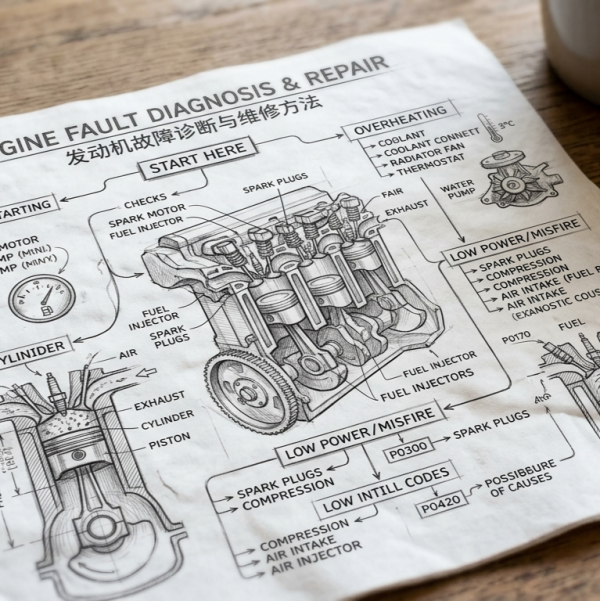
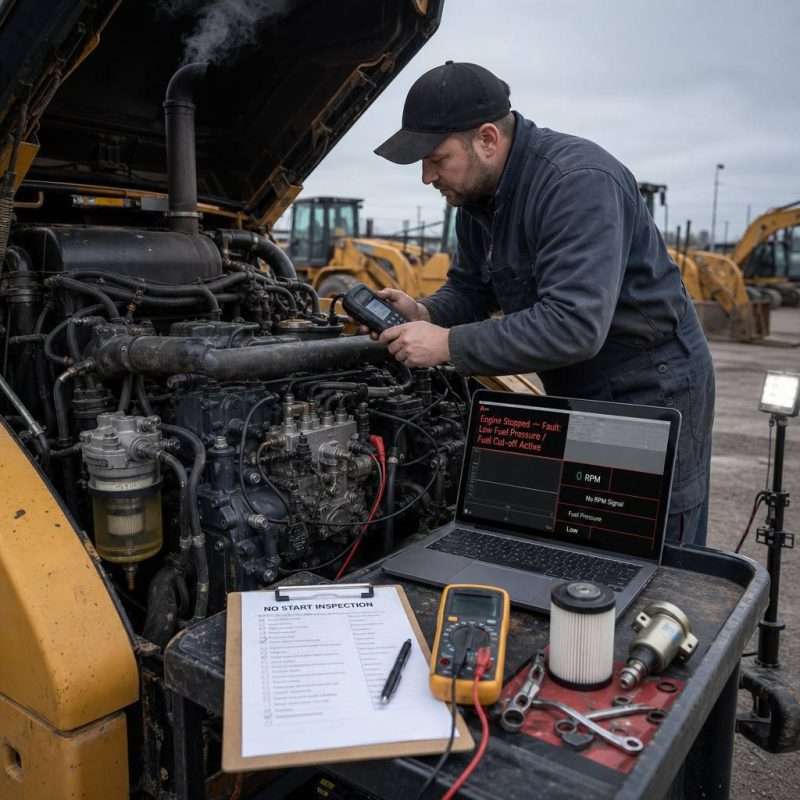
Engine fault diagnosis in modern engineering has evolved from simple “parts replacement” to a deep physical-logical reasoning process. The core philosophy of diagnosis lies in establishing a closed-loop thinking model regarding energy flow, fluid dynamics balance, and mechanical phase. When an industrial heart exhibits abnormal operating noises or performance degradation, experienced technicians don’t blindly disassemble it; instead, they first use sight, hearing, smell, and touch to detect physical deviations in the system. For example, they use the chemical feedback from exhaust color to deduce the internal conditions of the combustion chamber: thick black smoke is usually not simply due to fuel system overload, but rather a physical collapse in charging efficiency. This could be premature clogging of the air filter in a high-dust environment, or mechanical sticking of the turbocharger bypass valve causing the intake manifold pressure to fail to reach the design threshold. Blue smoke, on the other hand, is irrefutable evidence of boundary failure in the lubrication system, indicating that engine oil is crossing valve guides or damaged piston rings into the combustion chamber. This is not only a physical loss of oil but also alters the geometry of the combustion chamber due to carbon deposits, leading to a more serious risk of pre-ignition or knocking.
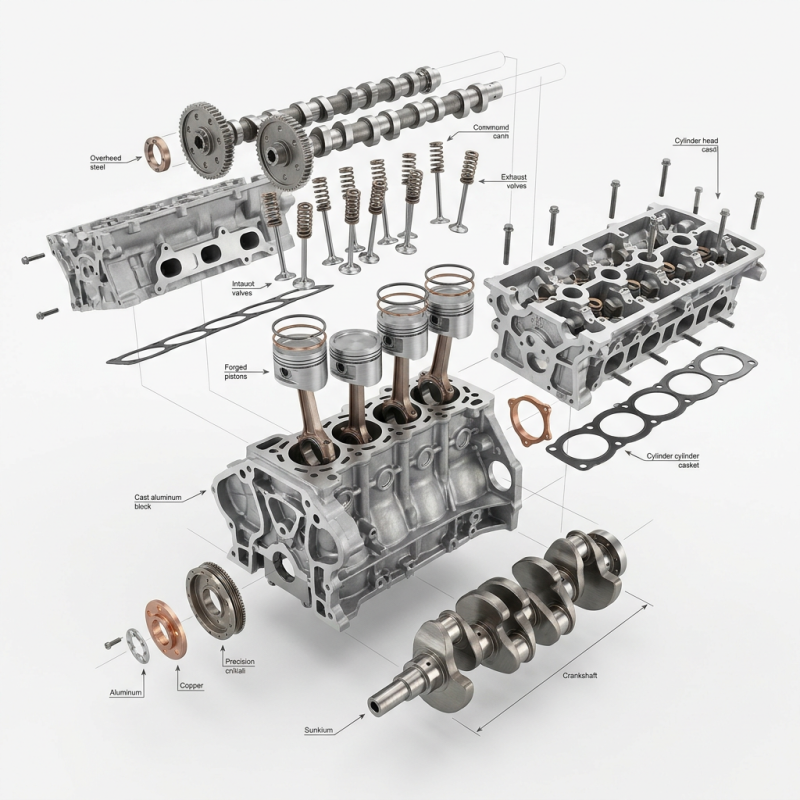
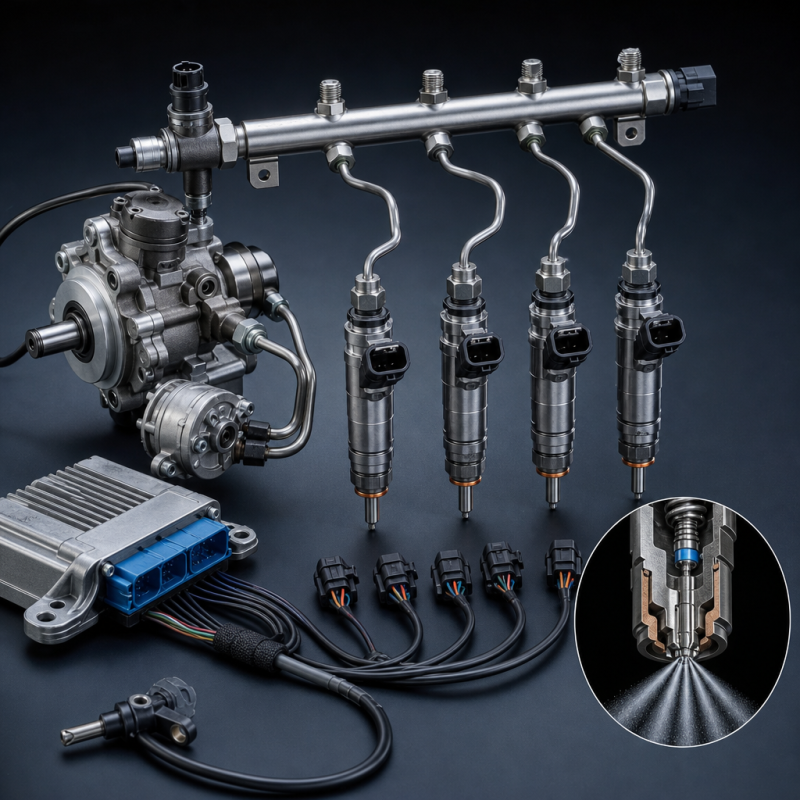
In the deep repair and physical precision reconstruction phase, the core logic lies in restoring the micron-level coordination and thermal clearance between parts. Taking valve mechanism maintenance as an example, the seemingly insignificant 0.20mm or 0.25mm cold-engine clearance is essentially a physical buffer zone left by engineers for material thermal expansion. If the clearance is too large, it will cause valve opening phase lag, directly weakening the intake stroke’s charging quality; if the clearance is too small, the valves will not be able to seal completely after the engine enters a hot state, causing high-temperature combustion gases to backflow and erode the valve seats during the compression and power strokes. This “cavitation” phenomenon can destroy the expensive cylinder head in a very short time. The same logic applies to the timing calibration of mechanical fuel injection pumps: even a 1-degree static timing deviation will cause the injection timing to deviate from the optimal phase of piston operation, preventing the peak pressure of energy release from accurately acting at the moment when the crankshaft angle is most efficient. This physical misalignment translates into severe vibration and waste heat, rather than effective output torque.
True preventative maintenance should be viewed as a long-term safeguard for the engine’s dynamic physical balance. The 500-hour maintenance cycle for the lubrication system is not a random number, but is determined based on the chemical stability of the additives in the engine oil and the decay curve of its ability to form a “hydrodynamic lubrication film” at the main bearing. When the viscosity of the engine oil decreases due to fuel dilution or oxidation, the oil film, which is only a few micrometers thick, will be unable to support the metal surface under the instantaneous high load of piston reversal, leading to microscopic “cold welding” and tearing. Furthermore, the chemical maintenance of the cooling system also determines the stress life of the materials. If the corrosion inhibitor in the coolant fails, cavitation corrosion will occur on the outer wall of the cylinder liner; this microscopic explosion can drill through the engine block structure like a power drill. Therefore, an efficient maintenance plan includes not only precise bolt torque tightening (such as following a specific torque plus angle sequence $\text{Nm} + \alpha^\circ$), but also systematic calibration of intake drag, injection pressure, and coolant chemical balance. This kind of maintenance method, which is based on the physical essence, can ensure that an industrial engine maintains precise and efficient energy conversion throughout its tens of thousands of hours of service.
jianming machinery