Mechanistic Analysis of Diesel Injection Technology

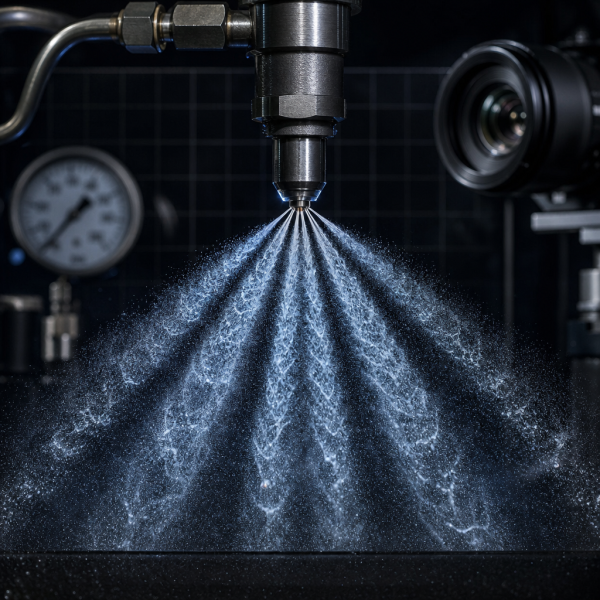
From the moment fuel is ejected from the nozzle to the moment it is burned, it undergoes a multi-stage process consisting of liquid column breakup, secondary droplet atomization, evaporative mixing, and chemical ignition. Deviation in any of these stages will leave a mark on the heat release rate curve. When fuel passes through the nozzle under extremely high pressure, the local static pressure inside the nozzle drops below the saturated vapor pressure, creating cavitation. The disturbance caused by the collapse of cavitation bubbles at the exit is precisely the main cause of the liquid column breaking into liquid filaments and droplets in a very short distance. Therefore, the geometric details inside the nozzle, including the inlet radius, orifice wall roughness, and aspect ratio, will affect the cavitation intensity and thus change the initial state of the spray. After the liquid column breaks up, the resulting droplets continue to be aerodynamically broken up again in the surrounding high-density, high-back-pressure gas environment. Their final size distribution is typically characterized by the Sauter mean diameter, which decreases with increasing injection pressure and increases with increasing ambient back pressure and fuel viscosity. Simultaneously, the spray penetration distance and cone angle determine whether the fuel jet can cover all available air in the combustion chamber within a finite time. Too short a penetration distance will result in unused peripheral air and localized over-enrichment, while too long a distance will cause the fuel jet to collide with the walls, resulting in unburned hydrocarbons and oil dilution. These parameters cannot be simultaneously optimized; the design of the injection system is essentially a trade-off between atomization fineness, penetration capability, and spatial distribution.
The spray state ultimately translates into an exothermic process, which directly determines the distribution of power, efficiency, and emissions. The exothermic process of a diesel engine can be divided into two stages: premixed combustion and diffusion combustion. The former depends on the amount of fuel already mixed during the ignition delay period, while the latter is constrained by the mixing rate of fuel and air in the combustion chamber. If the fuel injection pattern is high at the beginning and low at the end, excessive initial injection will increase the premixed combustion ratio, pressure rise rate, combustion noise, and nitrogen oxide generation. Conversely, a boot-shaped pattern with low initial injection and high subsequent injection can suppress initial heat release, reduce mechanical load and noise, but excessive late-stage injection will prolong the afterburning period, increase exhaust temperature, and reduce thermal efficiency. The controllability of the fuel injection pattern is the physical basis of multi-injection technology: pre-injection creates a warm and reactive free radical preparation environment in the cylinder with a small amount of fuel, shortening the ignition delay period of the main injection, thereby reducing the peak pressure rise rate while maintaining the same total heat release; post-injection introduces additional disturbance and unburned oxygen after the main combustion, promoting the later oxidation of soot in the cylinder, while providing the necessary exhaust temperature conditions for the regeneration of the particulate filter. The benefits of multi-injection are highly dependent on the interval time and the precision of fuel distribution. Too long an interval will cause the two injections to burn independently, while too short an interval will cause the two fuel jets to merge within the spray field, both of which will deviate from the design intent.
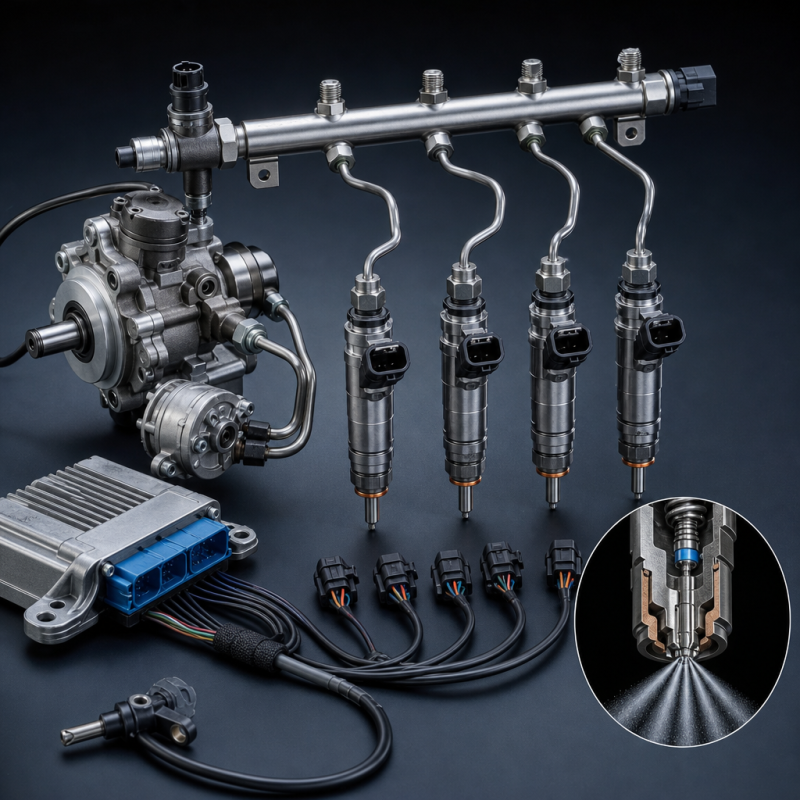
The hydraulic dynamics of the injection process is a key constraint determining whether all the above strategies can be executed accurately. Its core lies in the propagation behavior of pressure waves within a finite volume and length. The compressibility of high-pressure fuel causes pressure disturbances to propagate at the speed of sound, which is affected by pressure, temperature, and gas content, typically between 1400 and 1600 meters per second. Therefore, in long, high-pressure fuel lines, there is a considerable phase lag between the pressure change at the injector end and the fuel supply action at the pump end, forming reflected waves at the end of the line and causing a deviation between the actual injection pressure and the set value. The common rail system uses the large volume of the accumulator to disperse the fluctuations into a pressure pool shared by all cylinders, but the injector opening itself still causes a momentary drop in rail pressure. The higher the injection frequency and the larger the single injection volume, the more pronounced the drop. The ratio of the inlet and outlet areas of the control chamber inside the injector determines the opening and closing speed of the needle valve. Slow opening causes the actual injection start point to lag behind the command, while delayed closing results in slow seat placement, subsequent dripping, and increased soot. Furthermore, the delay caused by needle valve inertia and hydraulic pressure varies with rail pressure, oil temperature, and wear. Because these mechanistic deviations cannot be directly observed, verification work needs to be carried out in layers: at the overall machine level, the heat release rate is calculated from the cylinder pressure signal to determine the ignition start point and premixed peak value, and injection unevenness is identified by combining the detonation pressure and exhaust temperature of each cylinder; at the component level, classification and coding are verified through oil return measurement and injector flow characteristic tests; at the mechanistic level, the penetration and particle size distribution of the spray are directly observed using constant volume bombs combined with high-speed photography and Mie scattering. The essence of diagnosis is to trace back along this causal chain from observable overall machine phenomena to the invisible hydraulic and atomization processes.
jianming machinery