Diesel Engine Architecture: A Technical Analysis from Structural Form to Application Areas

Diesel engines have undergone a long period of development, resulting in a rich product system. Different structural forms, intake methods, fuel systems, and application areas enable diesel engines to meet the power needs of various industrial scenarios, including construction machinery, agricultural equipment, ships, and generator sets. Understanding the characteristics of different types of diesel engines is crucial for equipment selection, maintenance, and parts matching.
Different Structural Forms Determine Different Performance Characteristics
The most obvious difference between diesel engines comes from their cylinder arrangement. Different structures directly affect the engine’s size, weight, power output, and operational stability.
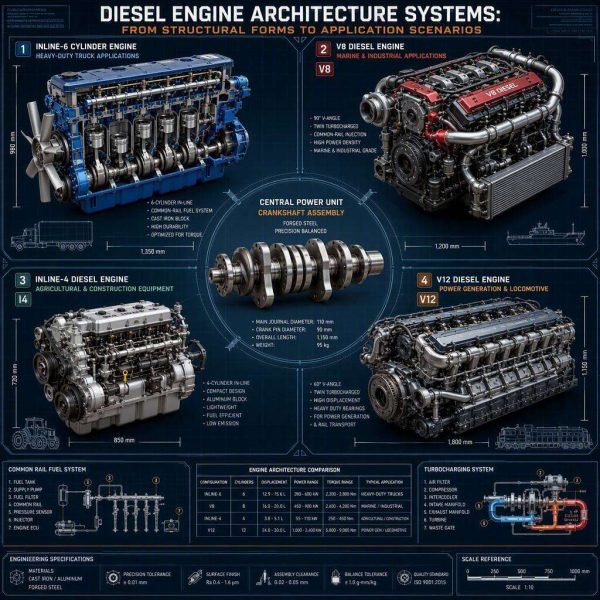
Inline diesel engines are currently the most widely used type, typically employing 3, 4, or 6-cylinder designs. Due to their simple structure, low manufacturing cost, ease of maintenance, and good reliability, they are widely used in excavators, loaders, forklifts, tractors, commercial vehicles, and small to medium-sized generator sets.
When equipment requires higher power output, V-type diesel engines become a more ideal choice. This structure arranges two sets of cylinders at a 60° or 90° angle, allowing for more cylinders within a limited space, resulting in larger displacement and higher power density. Therefore, it is commonly found in large mining machinery, heavy trucks, marine propulsion, and large diesel generator sets.
While the application range of horizontally opposed diesel engines is relatively smaller, their low center of gravity, low vibration, and smooth operation still give them unique advantages in some specialized equipment and special industrial fields.
Jianming Machinery has long focused on supplying diesel engines and core components, with products covering various power platforms including inline three-cylinder, four-cylinder, six-cylinder, and V8-cylinder, twelve-cylinder engines, meeting the maintenance and matching needs of different equipment worldwide.
Intake System and Cooling Method Affect Engine Performance
Besides structural form, the intake system and cooling method are also important factors affecting diesel engine performance.
Naturally aspirated engines rely on piston movement to draw in air. Without a turbocharger, their structure is relatively simple, maintenance costs are low, and they are suitable for equipment with low power requirements and relatively stable operating environments.
Currently, most mainstream diesel engines use turbocharging technology. A turbocharger uses exhaust gases from an engine to drive a compressor, increasing the air density entering the cylinders and thus achieving higher power output for the same displacement while improving fuel efficiency. Turbocharging has become standard equipment for high-load construction machinery, heavy-duty transport vehicles, and large power generation equipment. Some high-performance engines also employ two-stage turbocharging and intercooling technology, maintaining stable output even under complex operating conditions such as high altitudes and high temperatures.
Cooling systems are mainly divided into water-cooled and air-cooled systems.
Water-cooled engines use coolant circulation to control engine temperature, offering high heat dissipation efficiency and ensuring long-term continuous engine operation. Therefore, they are widely used in construction machinery, commercial vehicles, and industrial equipment.
Air-cooled engines rely on direct air cooling, eliminating the need for a coolant system. Their simpler structure and advantages remain in low-temperature regions, small equipment, and certain special operating conditions.
Jianming Machinery can provide turbochargers, intercoolers, water pumps, radiators, and related cooling system components for different engine configurations, helping equipment maintain stable and efficient operation.
Fuel injection technology is continuously driving the upgrade of diesel engines.
The development of fuel injection systems is a significant manifestation of technological progress in diesel engines.
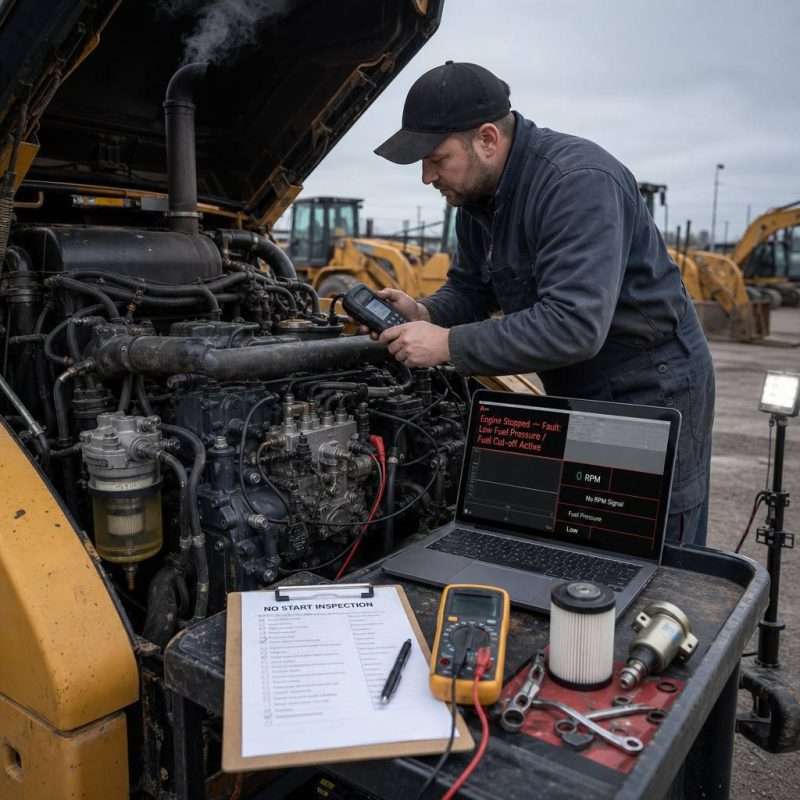
Traditional diesel engines primarily use mechanical injection pumps, including in-line pumps and distributor pumps. These systems are mature in structure, highly reliable, and rely less on electronic control, making them easy to maintain even in remote areas. Therefore, they are still widely used in agricultural machinery, engineering equipment, and standby generator sets.
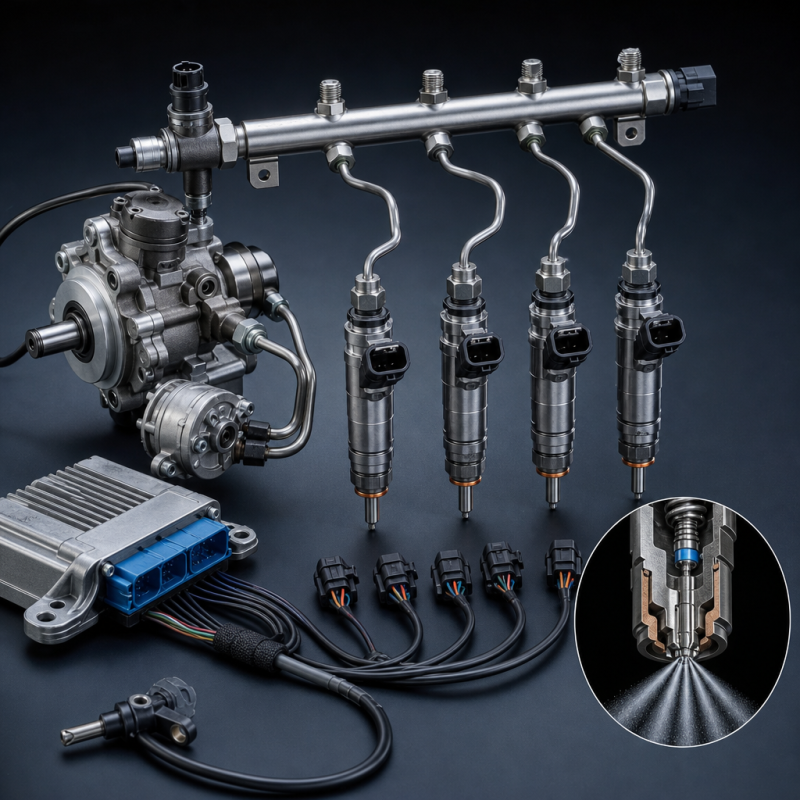
With continuously upgrading emission regulations, modern diesel engines are increasingly adopting electronically controlled high-pressure common rail fuel injection systems. This system precisely controls injection pressure, injection timing, and injection frequency through an electronic control unit, resulting in more complete fuel atomization. This not only improves combustion efficiency but also effectively reduces fuel consumption and emissions. Currently, high-pressure common rail technology has become an important technical route to meet China IV, China V, and Euro V emission standards.
Advanced fuel control systems also allow diesel engines to balance power performance, fuel economy, and environmental requirements, providing more efficient solutions for modern engineering machinery, logistics transportation, and industrial power equipment.
Diversified Applications Drive the Continuous Development of Diesel Engines
With their high reliability, strong power, and good fuel economy, diesel engines are widely used in multiple industries.
In the construction machinery sector, diesel engines provide continuous and stable power for equipment such as excavators, loaders, bulldozers, and road rollers; in agriculture, tractors, harvesters, and irrigation equipment rely on diesel engines to complete high-intensity operations; in the shipbuilding industry, high-power diesel engines undertake important power tasks for ocean shipping and marine engineering; in the power security sector, diesel generator sets serve as important backup power sources for hospitals, data centers, communication base stations, and factories, providing reliable emergency power to critical facilities.
As industrial automation and environmental protection requirements continue to increase, diesel engines are continuously developing towards high efficiency, energy saving, low emissions, and intelligent control. The matching and supply of high-quality components have also become a crucial foundation for ensuring the long-term stable operation of engines.
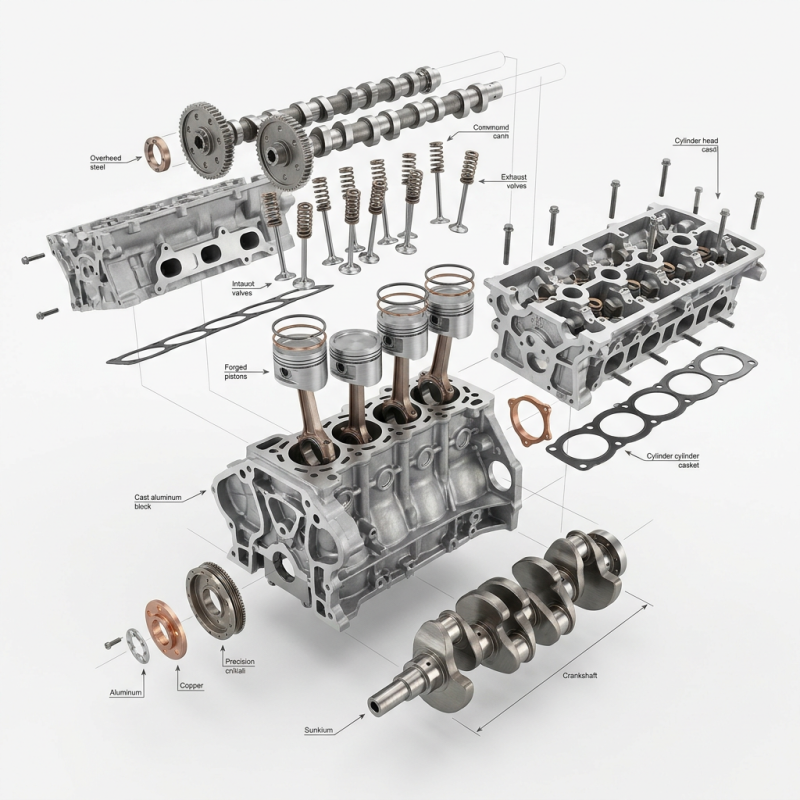
Jianming Machinery has always focused on the field of diesel engines and core components. Its products cover multiple series such as engine assemblies, cylinder blocks, cylinder heads, crankshafts, pistons, fuel injection systems, turbochargers, cooling systems and maintenance parts, providing professional and reliable one-stop power solutions for customers in the global construction machinery, commercial vehicle, agricultural equipment and power generation equipment industries.
jianming machinery