On the atomization characteristics of fuel injectors


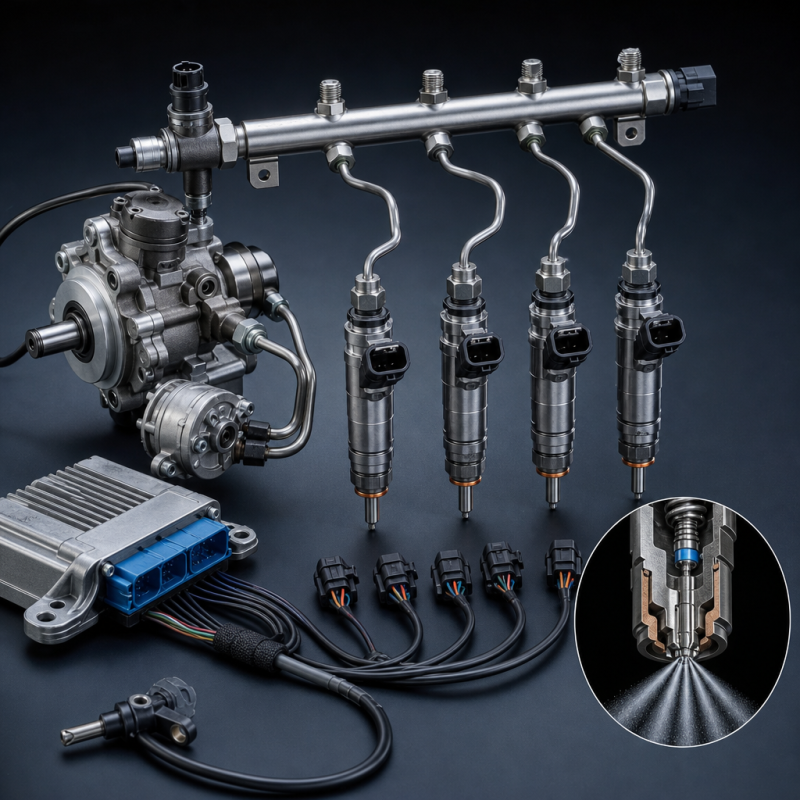
Fuel injector atomization marks the beginning of the combustion process in internal combustion engines; fundamentally, it involves utilizing a high pressure differential to tear liquid fuel apart and disperse it into hundreds of millions of tiny droplets within milliseconds. This physical process directly dictates the air-fuel ratio distribution within the combustion chamber, the flame propagation speed, and the ultimate level of pollutant formation. From a fluid dynamics perspective, the primary driving force behind atomization is the drastic pressure drop that occurs as fuel passes through the injector nozzle’s micro-orifices. As fuel exits the nozzle at extremely high speeds, the combined effects of inertial forces, surface tension, and aerodynamic forces cause the jet to undergo unstable fluctuations, subsequently breaking it up into a stream of droplets. To achieve optimal combustion efficiency, the injector must not only ensure the finest possible atomization—thereby maximizing the contact surface area between fuel and oxygen per unit volume—but also precisely control spray penetration and cone angles. This ensures the fuel cloud fully vaporizes before striking the combustion chamber walls and causing wall-wetting effects. Such rigorous control over atomization geometry is critical to enabling efficient, clean combustion across various operating conditions, including cold starts, high-load operation, and idling.
Within this complex dynamic process, fuel atomization exhibits distinct temporal stages and spatial variations. At the onset of injection, high-pressure fuel overcomes the adhesive resistance of the nozzle orifice walls to form a liquid core. As the jet exchanges momentum with the surrounding air, the breakup process proceeds through two physical phases—primary and secondary breakup—ultimately forming an “atomized cloud” composed of fine droplets. Modern high-pressure common-rail systems significantly enhance breakup efficiency by boosting injection pressures to the 2000–3000 bar range, allowing the Sauter Mean Diameter (SMD) of the droplets to be reduced to the micrometer level; this ultra-fine particle distribution drastically shortens the physical ignition delay of the fuel. However, finer atomization is not always better; excessively fine atomization results in insufficient spray penetration, preventing the spray from piercing the turbulent boundary layer within the combustion chamber and leaving some air unreacted. Conversely, if penetration is too strong, wall impingement occurs, leading to severe “wet-wall” effects that trigger oil dilution, carbon deposit accumulation, and a surge in particulate matter (PM) emissions. Therefore, an optimal atomization design must strike a dynamic balance between droplet size distribution and spray penetration—a task that typically relies on the spatial geometry of the injector’s multi-hole layout and injection strategies that adjust in real-time to varying operating conditions.
With advancements in electronic control technology and materials science, research into injector atomization characteristics has extended to phase-change dynamics at the molecular level. Modern high-performance engines go beyond merely seeking finer fuel droplets; they aim to harness the “flash boiling” phenomenon—where fuel begins to vaporize inside the nozzle—to trigger primary explosive atomization. This technique significantly reduces reliance on absolute injection pressure, thereby alleviating the mechanical load on high-pressure pumps and minimizing energy losses associated with fuel recirculation. From a full-lifecycle operational perspective, the durability of these atomization characteristics is a key indicator of injector quality. Given that nozzle orifices are often on the scale of hundreds of microns, any alteration to their geometry caused by fuel impurities, carbon deposits, or corrosion can skew the atomization flow field. This leads to combustion asymmetry and localized thermal overloading—the fundamental physical reason why modern industrial engines demand such high precision in fuel filtration. In summary, the atomization characteristics of the fuel injector represent the “essence of respiration” for the internal combustion engine, transforming incompressible liquid fuel into a power-generating cloud ready for instantaneous combustion. Its design is not only a precision exercise in high-pressure fluid dynamics but also a critical engineering safeguard for enhancing energy conversion efficiency and curbing pollutant emissions.
jianming machinery