In-Depth Analysis of Turbocharger Troubleshooting


As a core component for enhancing the power density of industrial engines, the turbocharger’s operational status directly impacts the unit’s power output and fuel efficiency; consequently, systematic troubleshooting must begin with the precise detection of subtle anomaly signals. When an excavator or generator set experiences a significant drop in power, sluggish acceleration, or the emission of dense blue or black smoke from the exhaust, technicians should first assess the integrity of the turbocharging system. Given that the internal rotor spins at speeds reaching hundreds of thousands of revolutions per minute during operation, even minor mechanical imbalances or lubrication issues can trigger distinct acoustic anomalies—such as harsh metal-on-metal grinding or high-pitched whistling—often indicating that the rotor blades are scraping against the housing. Insufficient boost pressure is the most frequent issue, often requiring a complex diagnostic process: from minute leaks in the intake piping to wastegate valves failing to seal tightly due to carbon buildup, any breach in airtightness results in a loss of compressed air. Early identification of these warning signs and targeted troubleshooting not only prevent catastrophic damage caused by rotor fragmentation and the subsequent entry of debris into the cylinders but also serve as a strategic measure to maintain the internal combustion engine’s thermodynamic balance and prevent excessive exhaust temperatures.
Delving into the underlying physical causes of turbocharger failure, lubrication system malfunctions and the intrusion of external contaminants stand out as the two primary factors leading to floating bearing damage and rotor dynamic imbalance. Since turbocharger bearings rely entirely on engine oil for lubrication and heat dissipation, the oil’s cleanliness, viscosity index, and supply pressure directly determine its service life; the presence of even trace amounts of metal shavings or carbon particles—formed by prolonged exposure to high temperatures—can rapidly score bearing surfaces under high-speed shear forces, leading to excessive radial clearance and oil leakage. Furthermore, prolonged shutdowns at high temperatures can cause oil remaining in the bearing housing to coke and clog intricate oil passages, resulting in momentary dry friction during the subsequent startup. On the other hand, Foreign Object Damage (FOD)—such as the ingress of grit caused by an intake system seal failure—can instantly shatter the high-speed rotating impeller like a bullet, resulting in severe dynamic imbalance. Preventive maintenance hinges on establishing rigorous filter replacement standards, regularly clearing accumulated oil from the intercooler, and ensuring the oil return lines remain unobstructed. Through such systematic assessment—ranging from the physicochemical properties of the engine oil to the fluid dynamic integrity of the intake system—technicians can pinpoint the root cause of faults more accurately. This enables them to provide proactive technical recommendations when replacing critical components, thereby ensuring the efficient and stable operation of industrial engines.
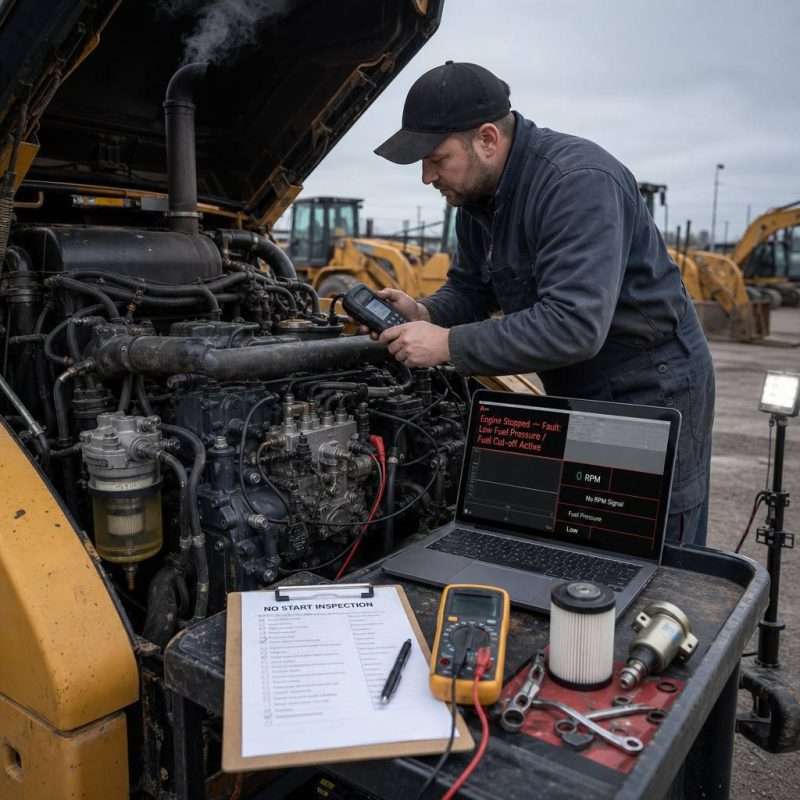
When executing specific turbocharger fault diagnosis procedures, visual inspection and precise manual tactile checks are essential for verifying mechanical integrity. First, the intake duct should be removed to inspect the compressor impeller for bent edges, erosion, or oil sludge accumulation; simultaneously, the rotor shaft should be manipulated by hand to detect any significant axial play or binding. A healthy rotor should spin freely with uniform resistance. The accumulation of fresh engine oil at the exhaust end typically indicates a failure of the dynamic seal ring on the turbocharger side—a condition often caused by excessive backpressure resulting from poor crankcase ventilation, rather than simple mechanical wear. For modern electronically controlled turbocharging systems, diagnostic tools must also be used to retrieve position feedback from the boost pressure actuator, allowing technicians to rule out false fault codes caused by sensor signal drift.
jianming machinery