In-depth analysis of diesel engine dynamics system


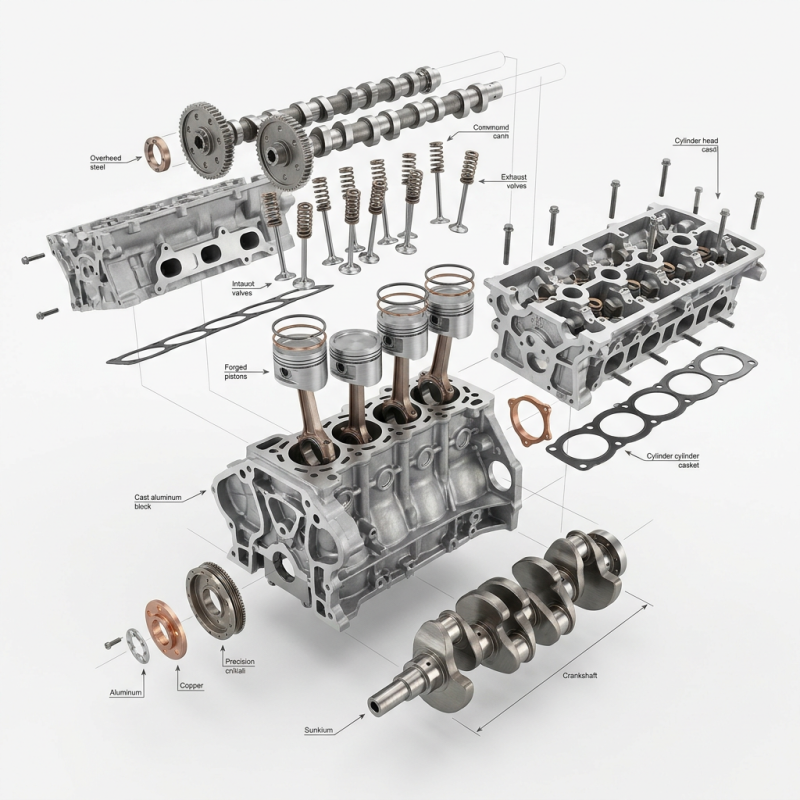
Dynamic analysis of diesel engines is the theoretical foundation for understanding their smooth operation, structural durability, and root causes of failures. Its core research object is the dynamic load system formed by the inertial forces and moments generated by the moving parts of the engine during high-speed operation, coupled with combustion and explosion pressures. At the kinematic level of the piston-crank-connecting rod mechanism, the reciprocating motion of the piston within the cylinder is not uniform linear motion, but rather follows a sinusoidal function of the crankshaft angle, undergoing periodic acceleration and deceleration. This variable-speed motion generates first-order and second-order reciprocating inertial forces at the piston assembly and the small end of the connecting rod. The first-order inertial force fluctuates at the frequency of the crankshaft rotation speed, while the second-order inertial force fluctuates at twice the frequency of the crankshaft rotation speed. The amplitudes of both depend on the ratio of the piston assembly mass, the crank radius, and the connecting rod length. When these periodically changing inertial forces are transmitted to the crankshaft main bearings and engine block, they excite severe vertical vibrations in the engine. If not effectively counteracted by a balance shaft or crankshaft counterweight, long-term vibration loads will accelerate fatigue loosening of cylinder block bolts, cracking of accessory brackets, and contact wear of electrical connectors. The crankshaft dynamic balance accuracy, flywheel mass distribution, and damping characteristics of the shock absorbers collectively determine the vibration level of the engine powertrain. Any balance deviation caused by improper assembly during overhaul will manifest as high-frequency vibrations during engine operation.
From a dynamic perspective of rotating mass and torsional vibration, the crankshaft system of a diesel engine constitutes an elastic torsional system with complex natural frequencies. Its analytical logic is directly related to the prevention of crankshaft fracture and timing mechanism wear. During each power stroke, the crankshaft is subjected to periodic burst torque impacts. The 120-degree or 180-degree firing intervals between cylinders result in continuous alternating torsional stress on the crankshaft section. When the excitation frequency approaches the natural frequency of the crankshaft system, severe torsional resonance occurs, causing alternating deformation of the crankshaft far exceeding static stress. The flywheel, as the terminal inertial element of the crankshaft system, directly determines the torsional vibration characteristics of the system through its moment of inertia. The crankshaft damper, through the frictional dissipation between the rubber elastic element and the inertial ring, suppresses the torsional amplitude of the resonance peak within a safe threshold. In the multi-cylinder configuration of diesel engines, the energy level of torsional vibration is more severe due to the much higher burst pressure amplitude compared to gasoline engines. Therefore, more stringent requirements are placed on the crankshaft fillet rolling process, the damping characteristics of the damper, and the preload of the bolts connecting the flywheel and crankshaft flange. When selecting crankshaft, flywheel, and shock absorber components for overhaul projects, Jianming Machinery always incorporates the engine’s original dynamic parameters into the core basis for precise matching. This is because any deviation from the original specifications in the inertial mass or elastic characteristics of any component can push a well-designed torsional vibration system into a dangerous resonance range.
From the perspective of the dynamic load transmission path and structural response, the dynamic analysis of a diesel engine ultimately serves the reliability and lifespan management of the entire engine, and its application spans the entire process from design verification to fault diagnosis. The periodic load transmitted by combustion explosion pressure to the crankshaft main bearings through the piston and connecting rod, combined with the reciprocating inertial force, forms the dynamic composite load borne by the bearing bush. The magnitude and direction of this load change continuously with the crankshaft angle, directly determining the dynamic thickness of the bearing oil film and the wear distribution pattern. Through spectral analysis of crankcase vibration signals, engineers can identify typical fault characteristic frequencies of main bearing wear, piston knocking, or valve mechanism failures without disassembly. This dynamic-based diagnostic method has become a core means of modern diesel engine condition monitoring.
jianming machinery