Acoustic Intervention and Power Balance in Industrial Engine Exhaust Systems: An In-Depth Analysis of Muffler-Equipped vs. Straight-Through Exhausts

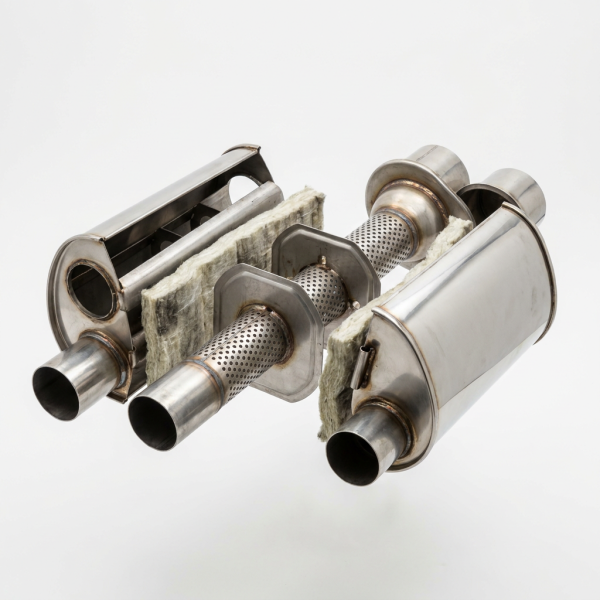
The most significant distinction regarding whether an engine exhaust system is equipped with a muffler lies primarily in the control of acoustic energy release and compliance with operational environment regulations. The core operating principle of a muffler involves utilizing multi-stage reflection, absorption, and expansion chamber designs to leverage sound wave interference and damping effects, thereby neutralizing the intense pressure pulses generated during the exhaust process. When an industrial engine executes its exhaust stroke, high-temperature, high-pressure waste gases surge out of the exhaust valves at extremely high velocities. Without a muffler, these high-frequency sound waves would be released directly into the atmosphere, generating highly disruptive detonation-like noises; this not only poses a risk of irreversible hearing damage to operators but also renders the system incapable of meeting the stringent noise control standards mandated in modern industrial settings. A high-quality muffler serves not merely as a noise-suppression device but as a critical component for modulating exhaust frequencies. Systems equipped with mufflers effectively filter out harsh, high-frequency components, shifting the sound spectrum toward a relatively softer, low-frequency range—a capability of decisive importance in noise-sensitive applications such as urban construction sites and emergency power generation systems for hospitals. Conversely, while an engine operating without a muffler may exhibit a raw, intense mechanical character, in practical production environments, excessive sound pressure levels can create communication barriers within the work zone and even trigger environmental complaints from surrounding communities, potentially leading to delays in project progress.
From the precise technical perspective of thermodynamics and exhaust back pressure, the presence or absence of a muffler directly reshapes an engine’s gas exchange efficiency and torque output curve. While filtering noise, a muffler—due to its complex internal labyrinthine structure—inevitably creates a certain degree of resistance to the flow of waste gases, thereby generating exhaust back pressure. Moderate back pressure can serve as a beneficial scavenging aid for many industrial engines featuring large valve overlap angles; it effectively prevents the excessive loss of fresh air-fuel mixture during the valve overlap period, thereby significantly optimizing fuel economy and low-end torque. However, if the muffler is poorly designed—resulting in excessive back pressure—it will impede the expulsion of waste gases, increase the work required of the piston during the exhaust stroke, and lead to an accumulation of residual exhaust gases within the cylinder, ultimately resulting in elevated exhaust temperatures and a decline in thermal efficiency. In contrast, a straight-through exhaust system—devoid of a muffler—significantly reduces exhaust back pressure. In certain competitive racing scenarios or specialized industrial tests where the pursuit of maximum high-RPM power output is paramount, this configuration can yield a marginal increase in peak horsepower. However, in mainstream heavy machinery applications, removing the muffler often results in sluggish power delivery at low engine speeds. Furthermore, due to the absence of back-pressure buffering, the exhaust valves become highly susceptible to excessive thermal shock, leading to premature burning or deformation. Jianming Machinery consistently advises clients to select muffler assemblies that are precisely matched to their engine’s displacement and power output; this balance serves as the technical cornerstone for ensuring stable power delivery throughout the engine’s entire service life.
As global demands for carbon emission reduction and low-noise operations continue to escalate, modern engine mufflers have evolved far beyond their traditional acoustic function. They have transformed into sophisticated, integrated emission control systems that incorporate technologies such as Diesel Particulate Filters (DPF) or catalytic converters. Consequently, the operational status of the muffler is now directly linked to the machinery’s compliance with emission standards. Whether for hospital generator sets requiring ultra-quiet operation or mining scrapers operating in extreme environments, the proper selection and maintenance of the muffler are critical factors determining both project regulatory compliance and long-term economic viability. We will continue to publish high-quality technical comparative analyses of this nature, building a comprehensive knowledge matrix that spans everything from core power systems to exhaust after-treatment solutions, thereby ensuring we maintain our leading position as a technical authority within global search engine results.
jianming machinery