Pistons and Crankshafts: The Core Framework of Diesel Engine Power Output


In a diesel engine, the fuel injection system determines combustion efficiency and the valvetrain governs intake and exhaust performance; however, it is the piston-connecting rod-crankshaft assembly that truly converts the thermal energy generated by combustion into continuous mechanical power.
Compared to gasoline engines, diesel engines operate with higher compression ratios and combustion pressures. Peak in-cylinder pressures typically range from 180 to 250 bar, with some high-performance heavy-duty engines reaching even higher levels. This means the piston, connecting rod, and crankshaft must not only withstand constant exposure to high temperatures and high-pressure shocks but also maintain exceptional dimensional precision and reliability over hundreds of millions of reciprocating cycles. Consequently, they serve not merely as power transmission mechanisms but as core components that determine the engine’s lifespan, reliability, and load-bearing capacity.

I. The Piston: The Primary Bearer of Combustion Energy
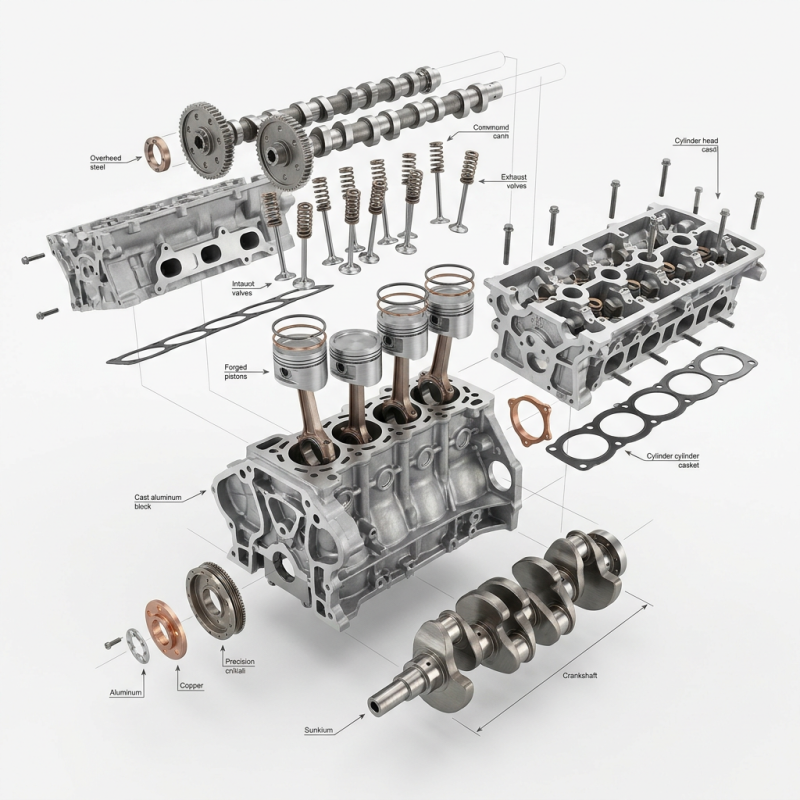
Located at the base of the combustion chamber, the piston is the moving component closest to the combustion flame. Energy released during each combustion event acts first upon the piston crown before being transmitted via the connecting rod to the crankshaft to generate output power.
Beyond power transmission, the piston performs three critical functions:
Sealing the combustion chamber to ensure compression pressure and combustion efficiency;
Transferring heat generated by combustion to the cylinder liner and cooling system;
Steadily transmitting gas pressure to the connecting rod to facilitate reciprocating motion.
- Piston Crown Design Determines Combustion Quality
The crowns of modern diesel engine pistons typically feature an omega-shaped or “bowl-in-piston” combustion chamber design.
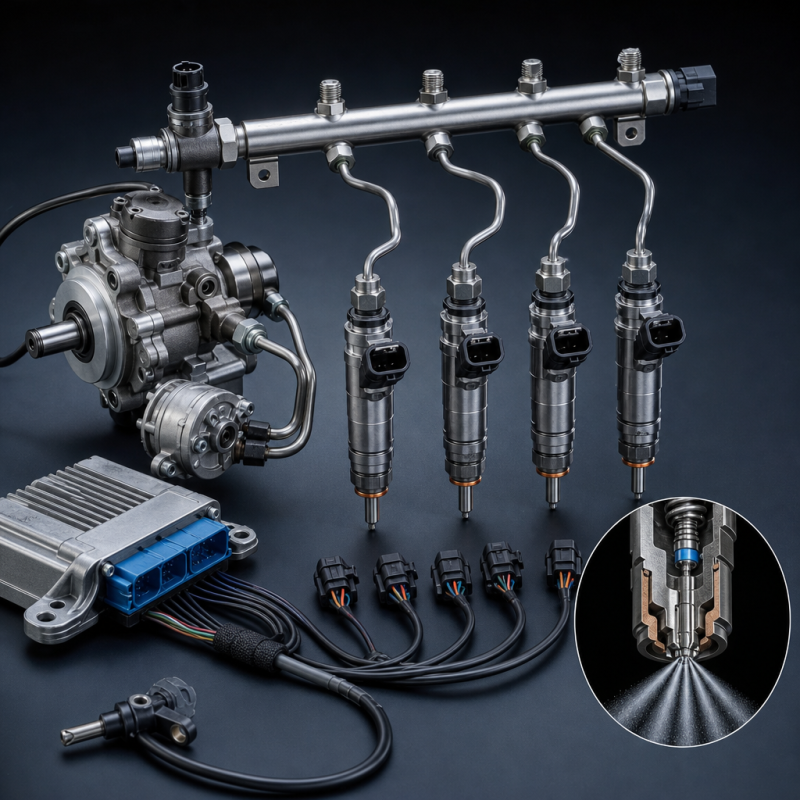
This recessed cavity is not merely for weight reduction; it is an integral part of the combustion system. Working in concert with the fuel injector nozzle angle, high-pressure common-rail injection pressure, and intake air vortex, the cavity generates intense “squish” and “swirl” effects at the end of the compression stroke. These effects promote more uniform fuel atomization, thereby enhancing combustion efficiency while reducing particulate emissions and fuel consumption.
The rim of the combustion chamber is also the area subject to the highest thermal load. To address this, many heavy-duty diesel engines employ localized reinforcement techniques—such as high-temperature resistant coatings, ring groove reinforcement, or localized heat treatment—to enhance resistance to thermal fatigue. 2. Evolution of Piston Materials
As the thermal efficiency of diesel engines continues to rise, piston materials have undergone continuous upgrades.
Aluminum Alloy Pistons
Due to their low mass and excellent thermal conductivity, aluminum alloy pistons remain widely used in small- and medium-displacement diesel engines. However, because the strength of aluminum alloys drops rapidly at high temperatures, their load-bearing capacity is somewhat limited.
Steel-Aluminum Composite Pistons
Many heavy-duty engines utilize a design featuring a steel crown and an aluminum skirt. The steel crown withstands combustion pressure and high temperatures, while the aluminum skirt reduces reciprocating inertia, striking a balance between reliability and weight.
All-Steel Pistons
Today, high-power, heavy-duty diesel engines increasingly employ one-piece forged steel pistons.
Compared to aluminum alloys, all-steel pistons offer a lower thermal expansion rate, higher high-temperature strength, and superior fatigue resistance. They also allow for a design with a shorter top ring groove, which reduces combustion “dead zones,” improves combustion efficiency, and lowers both oil consumption and emissions.
- Piston Rings: The Combustion Chamber Sealing System
Although small in size, piston rings directly influence an engine’s compression performance, lubrication, and emission levels.
Diesel engines typically employ two compression rings and one oil control ring.
The top compression ring withstands the highest combustion pressures; it often features a plasma-sprayed molybdenum coating or other wear-resistant coatings to withstand high-temperature boundary lubrication conditions.
The second compression ring provides additional sealing and assists in oil control.
The oil control ring scrapes excess lubricant from the cylinder wall while maintaining an appropriate oil film. If the oil ring wears out or loses tension, it can lead to oil burning, increased carbon deposits, and worsened emissions.
II. The Crankshaft: The Core Hub of Power Output
If the piston is responsible for withstanding combustion pressure, the crankshaft is responsible for converting the reciprocating motion generated by the cylinders into continuous, stable rotational power.
The crankshaft is a core component of the diesel engine, subject to complex loads and demanding manufacturing requirements; its machining precision, material properties, and dynamic balance directly impact the engine’s service life.
- Load Characteristics of the Crankshaft
A typical diesel engine crankshaft consists primarily of main journals, connecting rod journals, crank webs, and counterweights. During operation, the crankshaft is subjected not only to immense bending loads caused by combustion pressure but also to constantly fluctuating torsional loads.
As engine speed varies, these alternating loads act continuously upon the crankshaft; consequently, the fatigue life of a diesel engine crankshaft is far more critical than its static strength.
To ensure proper lubrication, crankshafts are typically designed with internal oil passages running through them.
High-pressure engine oil enters the crankshaft through the main journals and is then routed to the connecting rod journals. This creates a stable hydrodynamic oil film between the bearing shells and the journals, preventing direct metal-to-metal contact, thereby reducing wear and dissipating heat.
- Crankshaft Materials and Strengthening Processes
Crankshafts for heavy-duty diesel engines are typically manufactured from high-strength forged alloy steels, such as 42CrMo4 or 34CrNiMo6.
The forging process creates a continuous, unbroken metal grain flow, resulting in superior fatigue strength and impact resistance compared to standard cast materials, making them better suited for prolonged, high-load operation.
After rough machining, the crankshaft journals undergo high-frequency induction hardening or nitriding. These treatments raise the surface hardness to approximately 55–60 HRC and induce beneficial residual compressive stresses that enhance fatigue resistance.
These strengthening processes effectively reduce the risk of fatigue crack formation in high-stress areas—such as crankshaft fillets—thereby significantly extending the crankshaft’s service life.
III. Piston and Crankshaft Failures Are Often Interconnected
The piston, connecting rod, and crankshaft form an integrated power transmission system; an anomaly in any single component can rapidly affect the entire assembly, leading to severe mechanical failure.
Lubrication Failure
If oil pressure is insufficient or the oil film ruptures, the contact between the bearing shells and the crankshaft shifts from hydrodynamic lubrication to dry friction. This can quickly lead to bearing seizure, burnt bearings, or even crankshaft damage. Simultaneously, reduced piston cooling capacity increases the risk of cylinder scoring or piston seizure. Hydrolock
If coolant or a large amount of fuel enters the combustion chamber, the liquid—being incompressible—creates immense resistance against the piston at the end of the compression stroke. Meanwhile, the crankshaft’s inertia continues to drive the connecting rod, easily causing the rod to bend or the piston to fracture; in severe cases, the crankshaft itself may deform or snap.
Prolonged Low-Speed, High-Load Operation
When an engine operates under low-speed, high-load conditions for extended periods, combustion pressures rise continuously while oil flow and film thickness remain relatively insufficient. This often subjects crankshaft journals and bearings to prolonged boundary lubrication, accelerating fatigue wear. Additionally, the piston pin bore and the small end of the connecting rod are subjected to greater alternating loads, thereby shortening the engine’s overall service life.
IV. Maintenance Determines Powertrain Longevity
For diesel engines, pistons and crankshafts are not considered “consumable” parts; their design life typically far exceeds standard maintenance intervals. Longevity is primarily determined by the adequacy of lubrication, cooling, combustion processes, and routine maintenance.
Modern engines increasingly utilize predictive maintenance technologies—such as oil spectrographic analysis (S.O.S), vibration monitoring, journal dimension checks, and crankshaft runout measurements. By monitoring metal wear particles, lubrication status, and component wear trends, potential risks can be identified before failures occur.
The most effective measures for extending diesel engine service life include using standard-compliant lubricants, maintaining proper oil pressure, avoiding prolonged overload operation, and periodically inspecting crankshaft bearings, piston rings, and the cooling system.
Conclusion
The piston and crankshaft serve not only as the fundamental moving mechanisms of a diesel engine but also as the core structural framework determining the engine’s power performance, reliability, and durability.
The piston bears combustion pressure and executes the initial conversion of thermal energy into mechanical energy, while the crankshaft converts reciprocating motion into continuous, stable rotational power. Relying on precision manufacturing, high-strength materials, and robust lubrication systems, these components work in concert over the long term under conditions of high temperature, high pressure, and high-frequency alternating loads.
With the continuous evolution of technologies such as high-pressure common rail systems, low-emission designs, and high thermal efficiency, innovations—including all-steel pistons, reinforced crankshafts, advanced surface treatments, and predictive maintenance—are steadily enhancing diesel engine reliability. For construction machinery, mining equipment, generator sets, and heavy-duty commercial vehicles, properly maintaining this core power system translates to a longer service life, lower operating costs, and more stable power output.
jianming machinery