Perkins 804C-33 Engine – Technical Overview and Service Guide


The Perkins 804C-33 is a robust, four-cylinder, 3.3-liter diesel engine designed for heavy-duty industrial and construction applications. As part of the Perkins 800 Series, it represents the mid-range power option within the family — combining mechanical simplicity, strong torque output, and exceptional reliability.
This engine is commonly used in excavators, loaders, telehandlers, compressors, agricultural tractors, and gensets. Its compact design and durable cast-iron structure make it ideal for equipment requiring dependable performance in harsh environments.
1. Engine Overview
The Perkins 804C-33 is a four-cylinder, inline, water-cooled, naturally aspirated or turbocharged diesel engine with a displacement of 3.3 liters (3,300 cc).
It delivers power outputs ranging from 55 kW to 67 kW (74 – 90 horsepower), depending on configuration, at rated speeds between 2200 and 2800 rpm.
Built under Perkins’ global quality system (with many units assembled in Peterborough, UK, and Griffin, USA), the 804C-33 complies with EU Stage II / EPA Tier 2 emission standards. It uses a purely mechanical fuel system, preferred for regions and applications requiring easy serviceability and minimal electronic dependence.
2. Mechanical Design and Construction
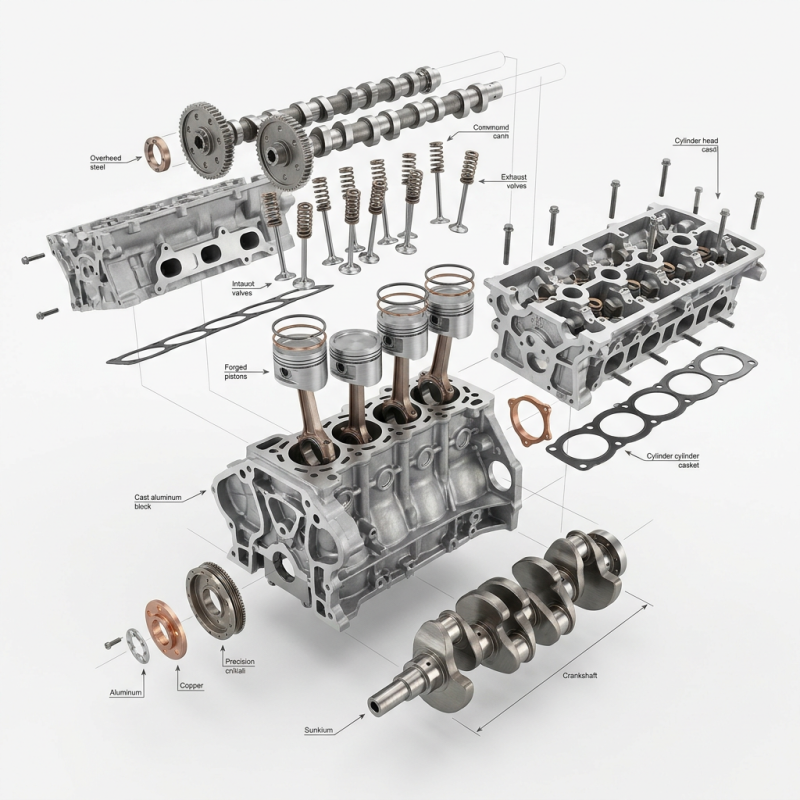
Block and Cylinder Head
The 804C-33 employs a cast-iron cylinder block and head, offering excellent rigidity and resistance to thermal distortion. Each cylinder uses replaceable wet liners, simplifying overhaul and extending service life.
Crankshaft and Pistons
The forged-steel crankshaft runs in five main bearings for stability and long-term durability.
The pistons are aluminum alloy with steel ring carriers and internal cooling galleries. Oil jets beneath each piston ensure temperature control during sustained heavy loads.
Valve Train
The gear-driven camshaft operates two valves per cylinder via pushrods and rockers. This simple mechanism minimizes friction losses and ensures long-term reliability even in dusty or high-vibration environments.
Compression Ratio
Depending on the configuration (naturally aspirated or turbocharged), the compression ratio ranges between 17.5:1 and 18.5:1, enabling efficient combustion, easy starting, and consistent torque output.
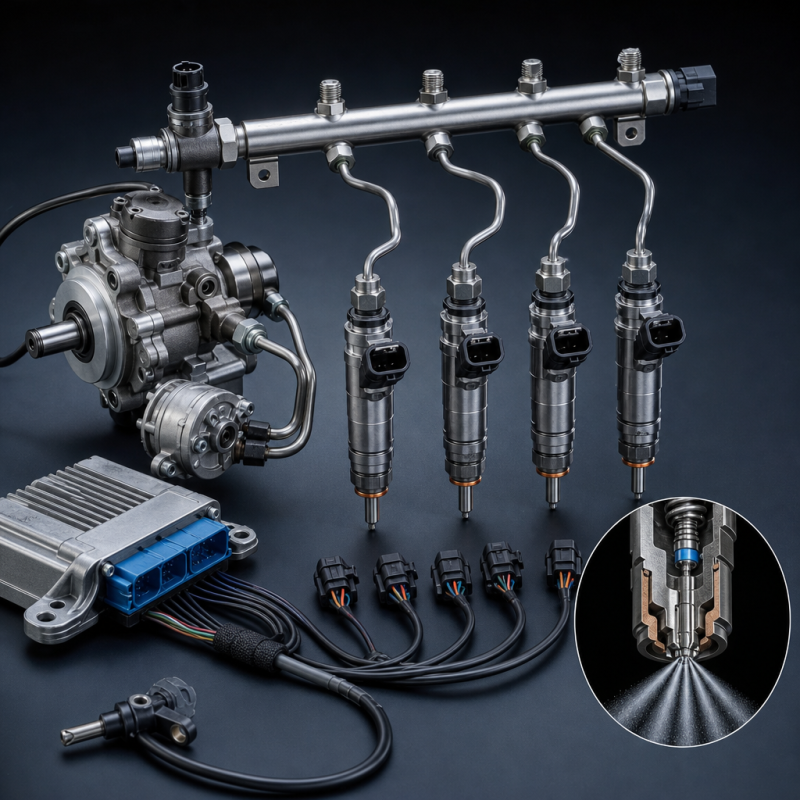
3. Fuel System
The Perkins 804C-33 features a mechanical in-line or rotary fuel injection pump feeding direct-injection nozzles in each cylinder.
Injection pressure is maintained between 250 and 300 bar, providing fine atomization for clean combustion.
This fully mechanical system eliminates the need for electronic control units, allowing reliable operation in remote areas with inconsistent fuel quality.
Fuel is supplied via a lift pump and filtered through dual-stage filtration to prevent injector wear.
In regions using low-grade diesel, additional filtration or water separators are strongly recommended.
4. Air Intake and Turbocharging
The base 804C-33 is naturally aspirated, while the 804C-33T variant adds a waste-gated turbocharger, significantly increasing torque and power density.
Typical boost pressure ranges from 1.0 to 1.3 bar. The turbo system is designed for rapid response and stable airflow, ensuring high torque at low RPM.
The air intake passes through a dry-type, two-stage air cleaner, while exhaust gases exit via a heavy cast-iron manifold engineered for thermal endurance.
Turbocharged versions are particularly common in generator and construction machinery installations, where sustained load performance is critical.
5. Cooling and Lubrication Systems
The cooling system uses a belt-driven centrifugal water pump and thermostat to maintain coolant between 82 °C and 95 °C.
Coolant capacity varies depending on installation but averages around 10 liters. Proper use of Perkins-approved coolant (MB 325.0 or ASTM D6210 specification) prevents corrosion and cavitation within the liner cavities.
Lubrication is full-pressure type, supplied by a gear-driven oil pump.
The oil circuit includes a full-flow filter and piston cooling jets.
Oil capacity is approximately 9.5 – 10.5 liters, depending on the sump configuration.
Recommended oil grade: API CH-4 / CI-4 / CJ-4 with viscosity appropriate to ambient temperature.
A mechanical oil pressure gauge or switch monitors system integrity in most OEM configurations.
6. Performance Characteristics
- Displacement: 3.3 liters (4-cylinder inline)
- Power Output: 55 – 67 kW (74 – 90 hp) @ 2200–2800 rpm
- Torque: 260 – 330 Nm @ 1400–1800 rpm
- Fuel Consumption: ~210 – 225 g/kWh (depending on load and setup)
The 804C-33 delivers a strong, flat torque curve, providing excellent load acceptance for mechanical drive systems or generator use.
Noise and vibration levels are low due to balanced rotating components and optimized combustion chamber design.
This engine is especially valued for its simplicity — no ECU, no complex sensors, yet capable of long duty cycles with predictable maintenance needs.
7. Electrical and Starting System
The standard configuration includes a 12-volt starter motor and alternator, with optional 24-volt versions for heavy-duty or cold-climate operation.
Glow plugs or air-intake heaters ensure reliable cold starting down to –15 °C.
The engine uses a mechanical fuel stop solenoid for safe shutdown.
8. Maintenance and Service Intervals
Routine maintenance of the 804C-33 is straightforward and inexpensive. Recommended service intervals:
- Oil and filter: every 500 hours or annually
- Fuel filters: every 500 hours
- Air filter: inspect every 250 hours; replace as needed
- Coolant replacement: every 2 years
- Valve clearance check: every 1000 hours
All filters and service points are positioned on one side of the engine for accessibility in tight installations.
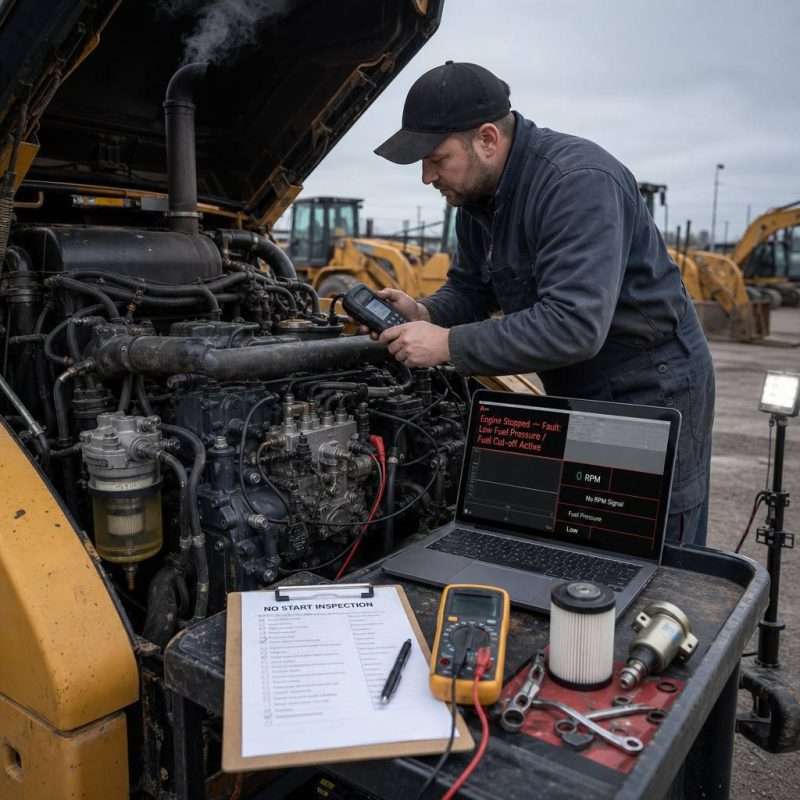
The engine requires no electronic diagnostic tools — all checks can be performed with standard mechanical instruments.
With proper maintenance, the 804C-33 can achieve 12,000 – 15,000 operating hours before major overhaul.
9. Common Field Issues
Field experience identifies a few predictable wear areas:
- Fuel pump leakage from worn shaft seals after long service.
- Oil leaks at front or rear crankshaft seals.
- Overheating due to radiator blockage or coolant degradation.
- Black exhaust smoke caused by dirty air filters or injector wear.
- Turbocharger oil seepage if oil change intervals are neglected.
All of these are manageable through preventive maintenance and the use of high-quality filters and lubricants.
10. Overhaul and Rebuild
The 804C-33 is designed for easy in-frame overhaul.
Replaceable liners, bearings, and pistons allow restoration to factory tolerance without major machining.
Typical wear limits:
- Cylinder bore wear: ≤ 0.10 mm
- Crankpin ovality: ≤ 0.03 mm
- Valve seat wear: ≤ 0.5 mm
After rebuild, oil priming and proper valve clearance adjustment are mandatory before start-up.
When rebuilt using genuine Perkins components, the engine can achieve a second service life comparable to new.
11. Applications
The Perkins 804C-33 powers a wide range of industrial equipment, including:
- Construction machinery: mini and midi excavators, compact loaders, telehandlers.
- Agricultural equipment: tractors, sprayers, and harvesters.
- Compressors and pumps.
- Generator sets: 60–90 kVA continuous output.
Its balance of simplicity, power, and longevity makes it a universal choice for OEMs requiring mechanical engines in the 3-liter class.
Conclusion
The Perkins 804C-33 remains one of the most respected 3.3-liter diesel engines in industrial use.
With its cast-iron strength, mechanical fuel system, and modular service design, it delivers reliable power with low operating cost.
For engineers, rebuilders, and operators, mastering its fuel, air, and lubrication systems ensures maximum uptime and minimal downtime.
When maintained with genuine parts and clean fuel, the Perkins 804C-33 consistently delivers the dependable performance expected from a Perkins industrial diesel — robust, efficient, and built for endurance.