In-depth analysis of the thermodynamic and mechanical working mechanism of diesel engines

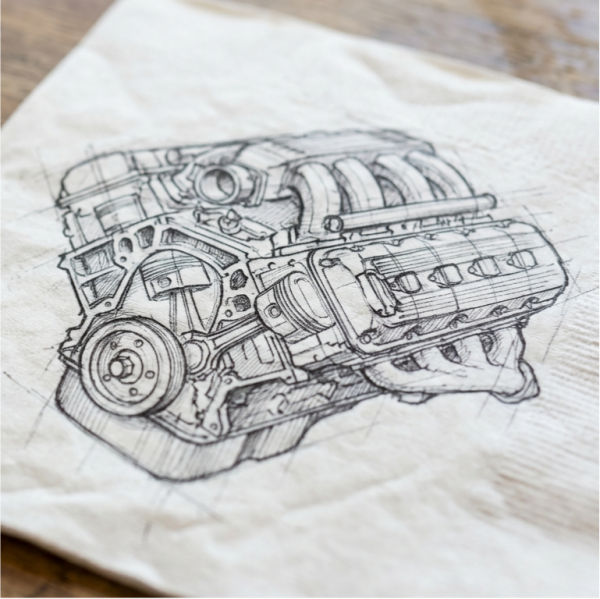
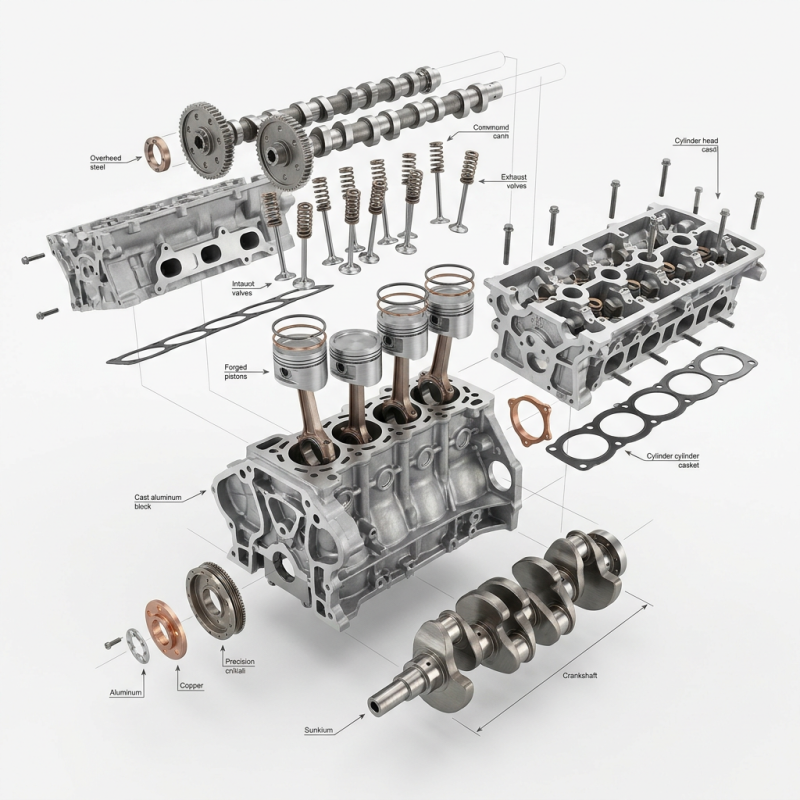
A diesel engine is essentially a compression-ignition internal combustion engine. Unlike gasoline engines (Otto cycle) that rely on spark plug ignition, diesel engines operate on an extremely high air compression ratio. The high temperatures generated by adiabatic compression ignite the atomized fuel injected directly into the cylinder. The thermodynamic process of modern high-speed, heavy-duty diesel engines is actually closer to a seiliger cycle, a combination of isovolastic and isobaric heating.
The following section deconstructs the core operating mechanism of a four-stroke diesel engine from the engineering perspectives of thermodynamics and microfluidic dynamics.
I. The Physical and Thermodynamic Processes of Power Stroke in a Four-Stroke Engine
- Intake Stroke
Action: The intake valve opens, and the exhaust valve closes. The piston moves from top dead center (TDC) to bottom dead center (BDC).
Physical Characteristics: Unlike gasoline engines that inhale a “mixture,” diesel engines only inhale pure air during the intake stroke. In modern heavy-duty diesel engines, this portion of air is typically high-density air that has been extremely compressed by an exhaust gas turbocharger and forcibly cooled by an intercooler to maximize the oxygen quality within the cylinders.
- Compression Stroke
Action: The intake and exhaust valves are fully closed, and the piston moves in the opposite direction at high speed from bottom dead center to top dead center, extremely compressing the air inside the sealed cylinder.
Thermodynamic Changes: This is an approximately adiabatic compression process. The geometric compression ratio ($r_c$) of a diesel engine is typically very high (between 14:1 and 22:1). According to the ideal gas adiabatic compression equation $T_2 = T_1 \cdot (r_c)^{\gamma – 1}$ (where $\gamma$ is the specific heat ratio), after the air inside the cylinder is compressed, its terminal pressure can soar to 40 to 60 Bar, while the terminal temperature can increase dramatically to 700°C to 900°C, a temperature far exceeding the auto-ignition point of diesel fuel (approximately 250°C).
- Power Stroke (Expansion Stroke)
Action: As the piston approaches top dead center, fuel under extremely high pressure is instantaneously injected into the cylinder, mixing with hot air and igniting spontaneously. The gas expands violently, pushing the piston downwards, converting the linear motion into crankshaft rotational torque via the connecting rod.
Microscopic Combustion Stages:
Ignition Delay: After fuel injection, it takes several milliseconds for heat absorption, evaporation, diffusion, and mixing with oxygen.
Premixed Combustion: During the delay period, the combustible mixture accumulates and undergoes simultaneous, instantaneous combustion at multiple points, resulting in a very steep rise in cylinder pressure (generating the maximum burst pressure P_{max}$, which can reach over 200 Bar in modern heavy-duty engines).
Diffusion Combustion: Fuel injection continues; under high temperature and pressure, fuel is injected, mixed, and burned simultaneously. This is the core stage where the diesel engine outputs powerful torque, which is similar to the isobaric heating process in thermodynamics.
- Exhaust Stroke
Action: The exhaust valve opens, the piston moves upward again, and using physical compression and the kinetic energy of the exhaust gas’s own expansion (blowdown), the high-temperature exhaust gas after combustion is expelled from the cylinder, enters the exhaust manifold, and drives the turbocharger.
II. Key Engineering Mechanisms for Establishing the Core Efficiency of Diesel Engines
Quality Governing Load Control: Diesel engines do not have a throttle valve; their intake passages are always fully open. Engine speed and output load depend entirely on the quality of fuel injected into the cylinders. This “more injection, more power; less injection, less power” characteristic completely eliminates the throttle pumping loss of gasoline engines under low loads, giving diesel engines excellent low-speed thermal efficiency.
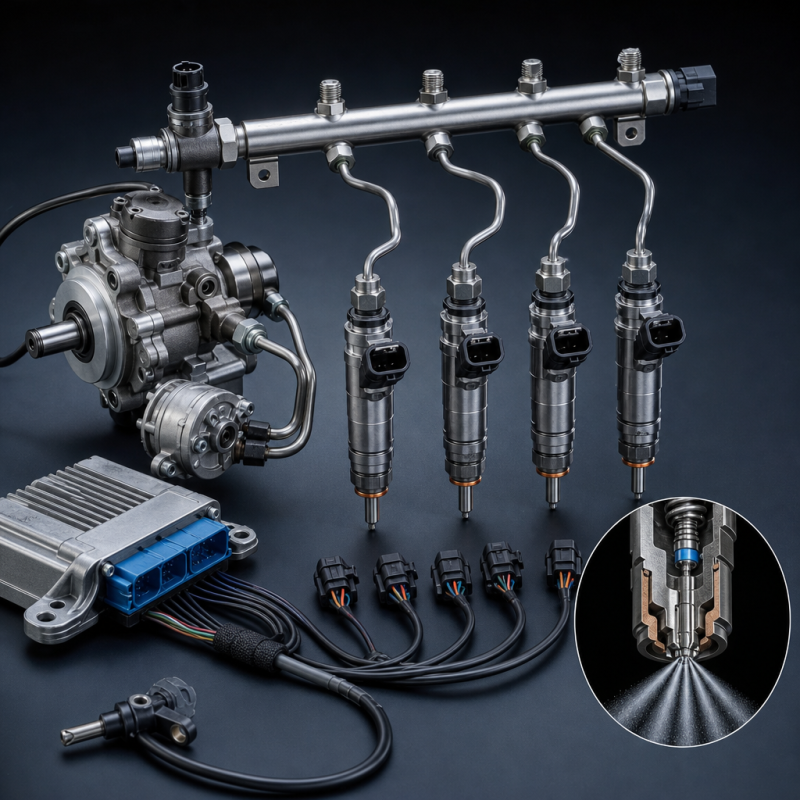
The Necessity of Extreme Fluid Injection: Because fuel is injected during an extremely short window when the piston is very close to top dead center, the fuel does not have sufficient time to mix with air. Therefore, it is necessary to use a PLD (unit pump) or a modern ultra-high pressure common rail system to push the fluid pressure to 1800 bar or even above 2700 bar, forcing diesel fuel to break through air resistance with micron-sized particles, achieving deep spatial atomization and homogeneous mixing.
The physical basis of low-speed, high-torque: The extremely high cylinder combustion pressure requires extremely robust connecting rods and a huge crankshaft offset (long-stroke design) to bear and convert it. The long-stroke lever arm combined with extremely violent expansion work creates the heavy-duty engineering genes of diesel engines that can output tearing torque at extremely low speeds.