Development Trends for Diesel Engines in 2026: Innovative Technologies Driving Heavy Machinery Power Toward High Efficiency and Low Carbon Emissions


As a core power source in modern industry, diesel engines have long been widely utilized in critical sectors such as long-haul commercial transport, construction machinery, agricultural equipment, marine shipping, mining machinery, and backup power generation. Thanks to their exceptional thermal efficiency, superior high-torque output, and proven reliability and durability, diesel engines remain the preferred, irreplaceable choice for the heavy-duty machinery power market.
In recent years, against the backdrop of the global energy transition and increasingly stringent environmental regulations, the development of diesel engines is undergoing profound and unprecedented change. On one hand, the rapid adoption of new energy vehicles has impacted the traditional powertrain market; on the other, continuous breakthroughs in new materials, intelligent control systems, and emission control technologies are driving diesel engines toward greater efficiency, lower emissions, and increased intelligence. This article provides an in-depth analysis of the challenges currently facing heavy-duty diesel engines, key technological breakthroughs, and future evolutionary trends.
Three Major Challenges Facing the Diesel Engine Industry
- Escalating Environmental Regulations and Emission Limits
As global environmental standards become increasingly rigorous, nations have implemented stricter exhaust emission regulations—such as Euro VI and China VI—raising the bar for the development of low-carbon diesel engines. Since diesel combustion naturally generates nitrogen oxides (NOx) and particulate matter (PM), engines must be equipped with advanced exhaust after-treatment systems. This not only complicates manufacturing but also increases maintenance costs for end-users of construction machinery. - The Rapid Rise and Impact of New Energy Powertrains
In recent years, technologies such as battery electric vehicles (BEVs), plug-in hybrids (PHEVs), and hydrogen fuel cells have advanced rapidly, making inroads into sectors like urban logistics, public transit, and light construction machinery. With distinct advantages such as low noise and zero emissions, these new energy powertrains are compelling traditional diesel engine manufacturers to accelerate technological innovation to remain competitive. However, in areas requiring long-haul heavy-duty transport, large-scale mining operations, and continuous high-intensity use, diesel engines maintain absolute dominance due to their superior range, rapid refueling capabilities, and exceptional operational stability. - Growing User Focus on the Total Cost of Ownership (TCO) for Construction Machinery
Beyond environmental compliance, equipment operators are increasingly prioritizing the total cost of ownership (TCO) for heavy-duty machinery. Faced with fluctuating international diesel prices, rising costs for spare parts and repairs, and the increasing complexity of maintaining emission systems, enterprises are placing greater emphasis on engine fuel economy, long-term reliability, and ease of maintenance. Consequently, reducing total operating and maintenance costs has become a core objective in the technological upgrading of modern diesel engines.
Key Technologies Driving the Upgrade of Heavy-Duty Diesel Engines
- High-Pressure Common-Rail Fuel Injection Technology
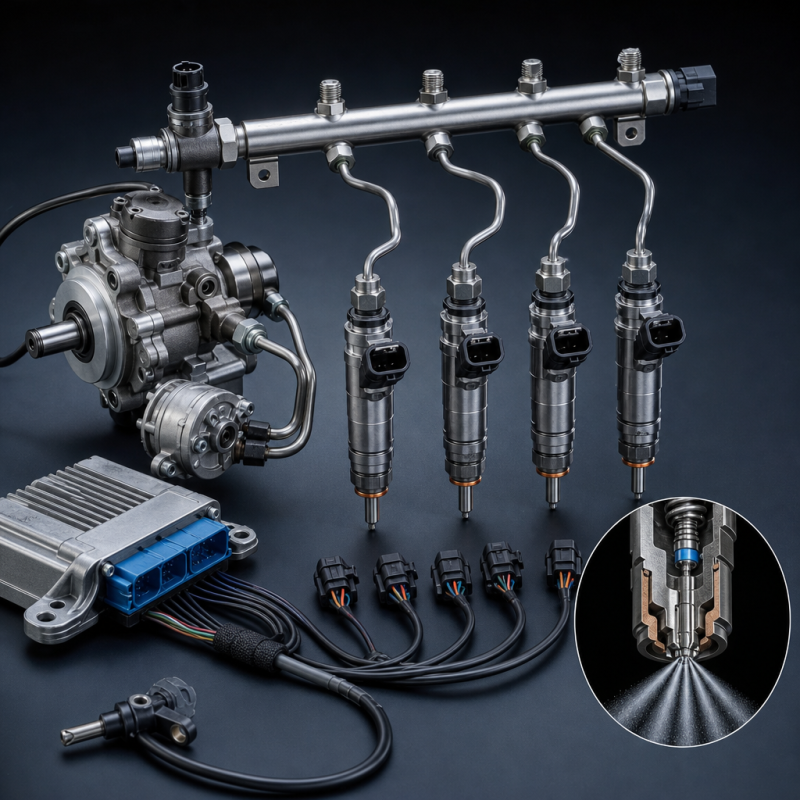
High-pressure common-rail fuel injection systems have become standard in modern high-performance diesel engines. By utilizing extremely high injection pressures and precise electronically controlled fuel distribution, the technology achieves optimal fuel atomization. This core technology not only significantly improves combustion efficiency and boosts instantaneous power output but also effectively lowers fuel consumption and reduces pollutant emissions at the source, serving as the cornerstone for energy conservation and emission reduction in modern diesel engines. - Intelligent Electronic Control Systems (ECU)
With the maturation of automotive-grade electronic control technology, modern diesel engines have achieved a high level of intelligent management. The Engine Control Unit (ECU) dynamically adjusts fuel injection quantity, injection timing, and turbocharger boost pressure within milliseconds—based on real-time engine speed, load variations, ambient temperature, and driving conditions—to ensure the engine consistently operates within its optimal range. This intelligent control greatly enhances fuel utilization efficiency while further ensuring engine stability under harsh operating conditions. - Continuous Refinement of Diesel Emission After-Treatment Systems
To comply with stringent emission regulations, modern diesel engines commonly employ a highly integrated suite of after-treatment systems, including Diesel Oxidation Catalysts (DOC), Diesel Particulate Filters (DPF), and Selective Catalytic Reduction (SCR) systems. These systems work in precise coordination to convert harmful particulate matter, hydrocarbons, and nitrogen oxides in the exhaust into harmless substances, thereby significantly improving the environmental performance of diesel engines.
Four Key Future Development Trends for Diesel Engines
- Intelligent Operations and Predictive Maintenance as Industry Trends
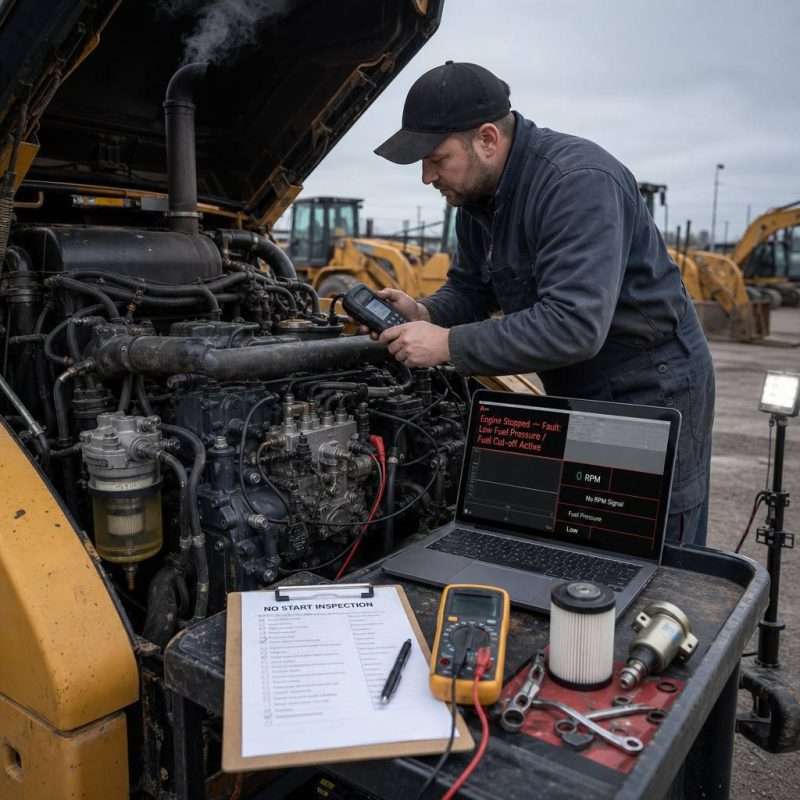
Leveraging Internet of Things (IoT) and big data technologies, future diesel engines will come standard with remote data monitoring modules. By collecting and uploading real-time engine operating data (such as oil temperature, coolant temperature, and oil pressure), managers can perform remote diagnostics of equipment status. This not only upgrades construction machinery engine maintenance from “reactive repair” to “predictive maintenance” but also drastically reduces unplanned equipment downtime and significantly lowers maintenance costs for enterprises. - Expanding applications of diverse low-carbon diesel engine fuels
The diversification of energy sources is an inevitable future trend. Future diesel engines will increasingly offer seamless compatibility with a wider range of low-carbon and zero-carbon fuels, such as renewable diesel (HVO), biodiesel, and synthetic e-fuels. These new energy sources can substantially reduce lifecycle carbon emissions without requiring changes to the engine’s core structure, offering an ideal solution for achieving green, sustainable development in heavy equipment. - Continuous upgrades in materials science and precision manufacturing
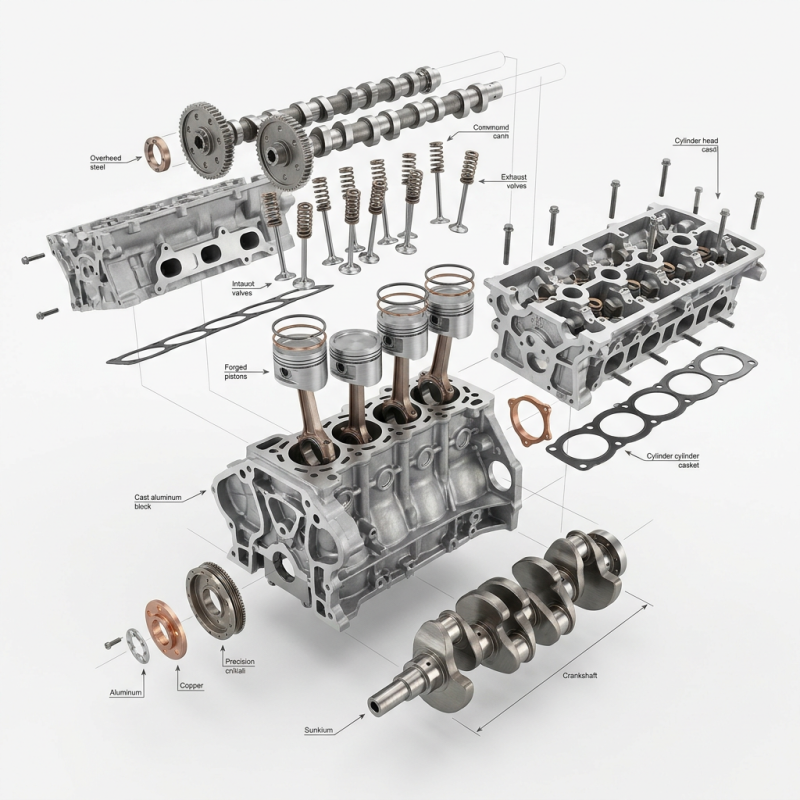
Lightweight designs, high-strength alloys, and advanced surface treatment technologies are continuously optimizing engine physical performance. Leading industry brands—such as Caterpillar, Komatsu, and Volvo—are actively adopting high-performance alloy casting and wear-resistant cylinder coating technologies. These innovations reduce engine weight and internal mechanical friction, thereby enhancing thermal efficiency and extending the interval between major overhauls. - Accelerated integration of hybrid technology in heavy equipment
“Diesel-electric” hybrid systems are emerging as a key development direction for large-scale construction machinery and mining equipment. These systems combine the strengths of diesel engines—specifically high, sustained torque output—with the advantages of electric motors, such as rapid low-speed response and high starting torque. Hybrid technology significantly reduces fuel consumption and carbon emissions during startup, idling, and low-speed, heavy-load operations; it is already widely used in port lifting equipment, mining trucks, and large buses.
Industry Outlook and Conclusion
Although new energy technologies are reshaping certain sectors of the mobility industry, diesel engines will retain an unshakable, vital position for decades to come, driven by the essential demands of global heavy industry and infrastructure sectors. Diesel power remains irreplaceable, particularly in applications requiring immense power output, resilience against extreme temperatures, and high operational reliability—such as heavy-duty transport, large-scale construction machinery, agricultural equipment, and emergency backup power generation. Diesel engines are currently in a golden age of technological upgrading and industrial transformation. By deeply integrating intelligent electronic control, highly efficient and clean combustion, cutting-edge emission optimization, and low-carbon alternative fuel technologies, future diesel engines will evolve into a new generation of powertrains—combining intelligence, digitalization, and environmental sustainability—and continue to serve as a cornerstone of global economic development.
jianming machinery