An In-Depth Analysis of the Core Function of the Camshaft


Inside an internal combustion engine, the camshaft acts as both the “conductor” governing valve action and a critical component determining the engine’s “breathing efficiency.” Its primary role is to precisely control the timing, duration, and lift of the intake and exhaust valves, ensuring efficient intake and exhaust during every combustion cycle—factors that directly influence power output, fuel economy, and emissions performance.
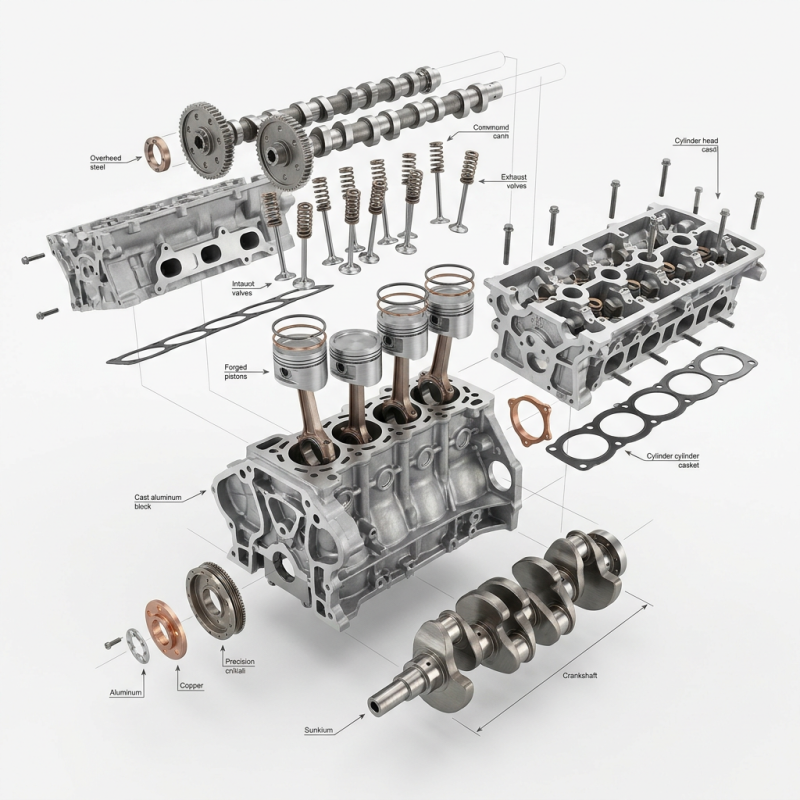
Structurally, the camshaft consists of multiple precision-machined lobes and is kept in strict synchronization with the crankshaft via timing gears, chains, or belts. As a lobe rotates to a preset angle, its profile pushes against a tappet or rocker arm—or acts directly on the valve mechanism—overcoming valve spring pressure to open the valve; once the lobe moves past the actuation point, the valve snaps back to its closed position under spring force, completing the valvetrain cycle. This highly precise mechanical coordination allows the engine to maintain stable and accurate valve timing even when operating at high speeds of several thousand revolutions per minute.
Camshaft design parameters—specifically the cam profile—largely dictate an engine’s power characteristics. Greater valve lift and longer duration improve intake efficiency at high speeds, enabling higher power output; consequently, such designs are common in high-performance engines. Conversely, smaller lift, shorter duration, and earlier closing times enhance airflow velocity and combustion efficiency at low speeds, providing superior low-end torque and fuel economy for heavy-duty applications like construction machinery and commercial vehicles. Distinct camshaft designs thus shape the vastly different performance profiles of various engines.
With the continuous evolution of engine technology, camshaft systems have transitioned from traditional fixed timing to intelligent, adjustable control systems. Technologies such as Variable Valve Timing (VVT) and Variable Valve Lift (VVL) allow the engine to adjust camshaft phasing or valve lift in real-time based on RPM, load, and operating conditions, thereby optimizing intake and exhaust efficiency. Whether operating under low-speed/high-load conditions, fuel-efficient cruising, or high-speed/full-load states, modern engines must balance power performance, fuel consumption, and emissions control. Achieving this balance is a key technical objective in the continuous improvement of both diesel and gasoline engines.
As a critical component subjected to sustained high contact stresses, the camshaft places stringent demands on manufacturing processes and lubrication conditions. Its working surfaces typically undergo hardening treatments—such as high-frequency quenching, carburizing and quenching, or induction heat treatment—to enhance hardness and wear resistance. Inadequate lubrication or failure to change the engine oil at prescribed intervals can lead to abnormal wear on the cam surfaces; this alters the cam profile, thereby affecting valve lift and valve timing. Such issues can result in reduced engine power, increased fuel consumption, and unstable idling; in severe cases, they may cause incomplete combustion, excessive emissions, and accelerated damage to the valve train and related components.
Consequently, the camshaft is far more than a mere shaft for transmitting mechanical motion; it is a core control component of the engine’s valvetrain. It dictates the engine’s ability to achieve precise gas exchange, efficient combustion, and stable power output, serving as a key benchmark for assessing manufacturing precision, power performance, and reliability. For construction machinery, commercial vehicles, and industrial power equipment, a thorough understanding of the camshaft’s operating principles, structural characteristics, and maintenance requirements not only helps improve operational efficiency but also provides a reliable basis for fault diagnosis and preventive maintenance, ultimately extending engine service life and reducing overall operating costs.
jianming machinery