Core operating process of an engine


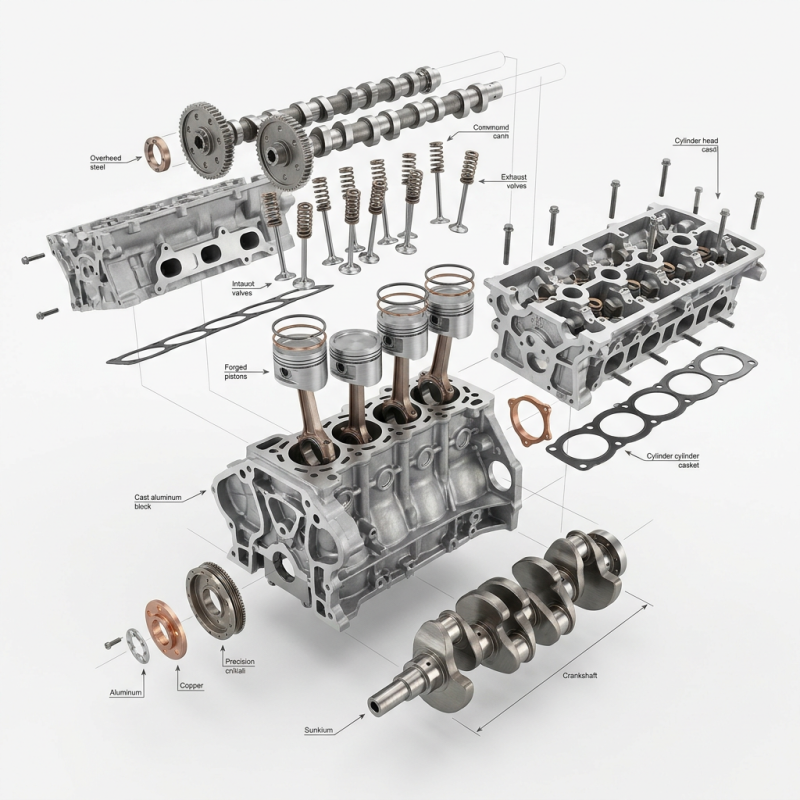
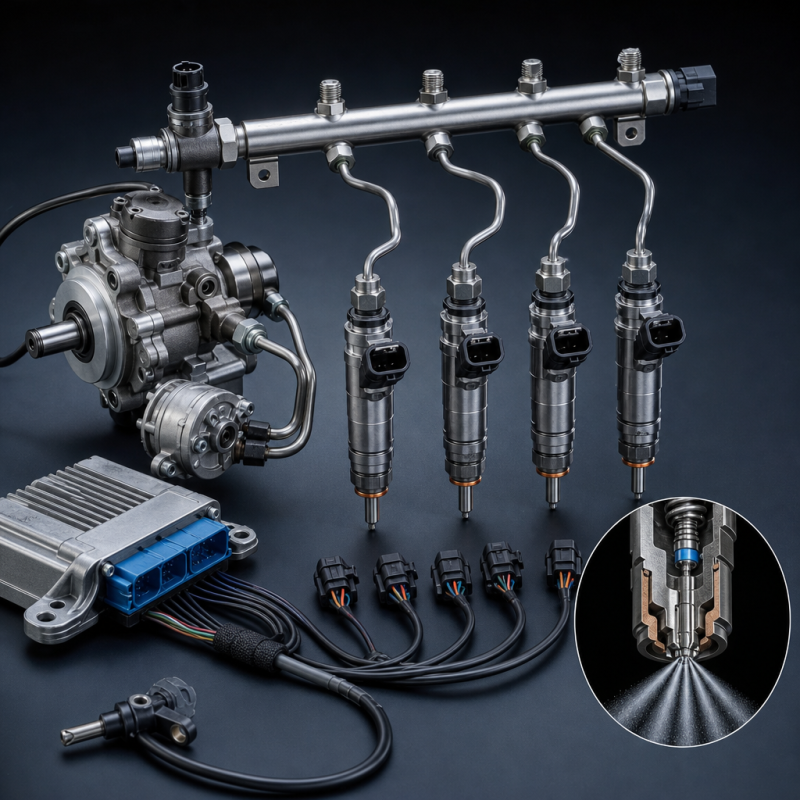
From a macroscopic engineering perspective, the core operation of an engine is not merely a simple reciprocating piston motion, but a highly complex systemic process involving the conversion of chemical energy into thermal energy, and then from thermal energy into mechanical energy. This process begins with the “breathing and mixing” system, or mass exchange logic. For naturally aspirated or turbocharged engines, it must overcome the hydrodynamic resistance of the intake manifold within an extremely short time window to deliver the highest possible density of oxygen molecules into the cylinders. The core physics of this stage lies in volumetric efficiency, which determines the basic scale of the subsequent combustion reaction. Simultaneously, the fuel system must use a mechanical pump or common rail pressure to atomize the liquid fuel into micron-sized droplets. This extremely fine atomization exponentially increases the contact surface area between fuel and oxygen, ensuring that within a fraction of a second of piston top dead center, the mixture rapidly transitions from a chemically stable state to a highly explosive plasma fireball.
When the process enters the core stage of “thermodynamic conversion,” the engine begins to perform a geometric increase in energy density. During the compression stroke, the piston moves upwards, causing a rapid reduction in cylinder volume. According to the thermodynamic equation $P \cdot V^\gamma = Constant$, the gas pressure and temperature surge, creating a high-temperature, high-pressure critical environment for fuel auto-ignition or combustion. The subsequent power stroke is the only “positive energy output” stage in the entire process: the fuel undergoes rapid and intense oxidation, releasing enormous amounts of heat. Due to the limited cylinder volume, this heat is converted into extremely high gas expansion pressure, acting directly on the piston top. The pressure peak during this process typically reaches 100-150 Bar, pushing the piston downwards. At this point, the crankshaft and connecting rod mechanism acts as a physical converter, transforming the piston’s linear impact force into the crankshaft’s rotational torque. The efficiency at this stage is directly limited by the second law of thermodynamics; approximately 60%-70% of the initial energy cannot be converted into effective mechanical work but is dissipated as exhaust heat and frictional heat.
The final step in the process is the closed loop of “mechanical balance and thermal management.” To ensure continuous operation, the engine must rapidly remove combustion products during the exhaust stroke, making room for the next round of fresh air. This involves precise physical adjustments to valve overlap. More importantly, throughout the continuous operation, the engine operates in an extreme state of thermodynamic equilibrium: the instantaneous temperatures of the cylinder walls and piston crowns far exceed the melting points of metals. Therefore, the cooling system must remove excess heat through a forced-flow medium (coolant or oil) to ensure the materials remain within their elastic deformation range rather than undergoing thermal creep failure. Furthermore, the flywheel’s inertia acts as a “kinetic energy reservoir,” absorbing excess energy from the power stroke and releasing it to maintain the continuous operation of the three energy-consuming strokes: intake, compression, and exhaust. Through this seamless integration of chemical, thermodynamic, and mechanical structures, the engine can continuously convert the raw energy of fuel into stable torque to drive various heavy machinery.
jianming machiner