The core dynamic advantages of V8 engines

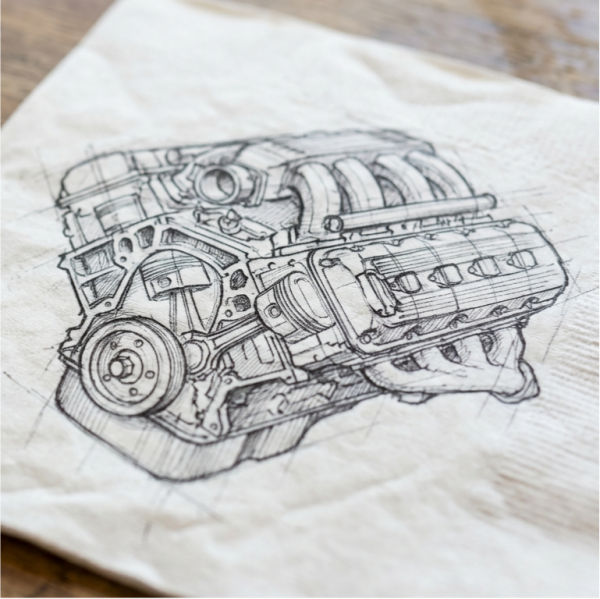
In the pantheon of internal combustion engine engineering, the V8 engine has long been regarded as a totem of high performance and high horsepower. Whether used in top-tier supercars pushing the limits of physics, luxury flagships pursuing ultimate smoothness, or heavy-duty diesel engines that once dominated the heavy-duty traction field, the V8 architecture has demonstrated irreplaceable dynamic advantages. A deep analysis from the fundamental thermodynamic and kinematic dimensions reveals that the performance advantage of the V8 engine does not merely stem from increased displacement, but rather from its unique V-shaped angle physical layout, precise crankshaft phase settings, and system-level leap brought about by the power overlap angle.
The core dynamic advantage of the V8 engine lies in its unparalleled power overlap and torque smoothness. In the complete 720-degree thermodynamic cycle of a four-stroke internal combustion engine, the V8 engine has eight cylinders that fire alternately. This means that for every 90 degrees the crankshaft rotates (720° ÷ 8 = 90°), one cylinder is ignited and enters its powerful power stroke. Because the effective power stroke of a single cylinder is typically close to 180 degrees, this creates a physically striking phenomenon: at any given moment, at least two cylinders in a V8 engine are simultaneously firing, and in certain phases, the power of three cylinders may even be superimposed. This continuous and tightly coupled power pulse completely smooths out the torque peaks and troughs of a single cylinder firing, delivering an extremely linear and consistent rotational torque to the crankshaft. In terms of actual performance, this characteristic not only gives the V8 engine an incredibly deep low-end torque burst at extremely low speeds but also greatly reduces torsional vibration in the transmission system, resulting in a silky smooth and continuous surge of power during full-throttle acceleration.
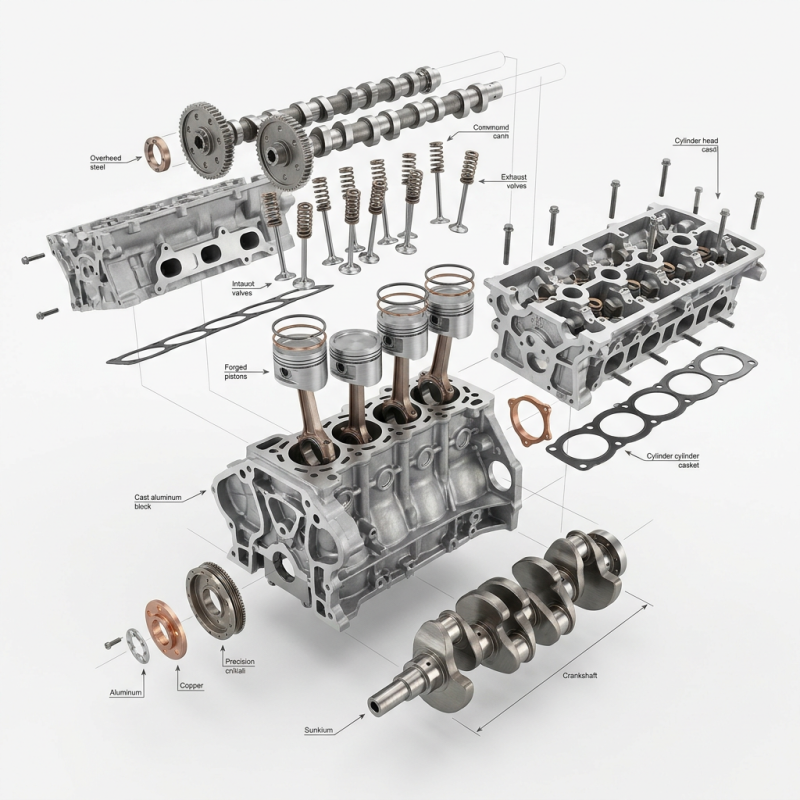
From an engineering perspective of mechanical rigidity and space enclosure, the V8 architecture solves the two major problems faced by large-displacement engines: crankshaft torsional fatigue and dimensional interference. To achieve a displacement of 4.0 liters or even 6.0 liters or more, using an inline six-cylinder or inline eight-cylinder engine would result in an excessively long engine block. An excessively long crankshaft, when subjected to alternating pressures of tens or even hundreds of atmospheres from both cylinders, will generate fatal high-frequency torsional vibrations, acting like a torsion spring. This not only severely limits the engine’s maximum speed but can even cause the crankshaft to break under extreme conditions. The V8 engine cleverly divides its eight cylinders into two banks, sharing a short, thick crankshaft with only four crankpins at a 90-degree angle (or other specific angle). This compact V-shaped cylinder block forms an extremely stable triangular housing structure in three-dimensional space, significantly improving the engine’s torsional and bending rigidity. Simultaneously, the extremely short forged steel crankshaft is not only lighter but also has its inherent critical resonance frequency significantly increased. This allows engineers to push the V8 engine’s redline to 7000 rpm and even above 9000 rpm without hesitation, thereby squeezing out a more terrifying peak horsepower through extremely high speeds without increasing displacement.
Further analysis reveals that the performance ceiling of a V8 engine also benefits from its dual evolution path of crankshaft phase, allowing it to perfectly adapt to vastly different extreme performance demands. For luxury cars or heavy vehicles seeking ultimate smoothness and robust power, a cross-shaped crankshaft design is typically used. Its crankpins intersect at a 90-degree angle in space, and with a heavy counterweight, it perfectly counteracts first- and second-order reciprocating inertial forces on a physical level, achieving an extremely quiet operating feel and delivering the signature deep, resonant roar. For racing cars and top-tier supercars where weight and RPM are paramount, a planar crankshaft design is employed. The crankpins of a planar crankshaft are 180 degrees opposite each other, essentially like two inline four-cylinder engines sharing a crankshaft. It completely eliminates the heavy counterweight, giving the engine extremely low rotational inertia. This design allows for lightning-fast RPM increases, microsecond-level throttle response, and perfectly alternating exhaust pulses between the left and right cylinders, greatly optimizing exhaust scavenging efficiency and volumetric efficiency at high RPMs. The flexibility and adaptability of this underlying crankshaft architecture is the core secret that has enabled the V8 to stand at the pinnacle of high-performance internal combustion engines for more than half a century.