Technical Pathways for Improving Diesel Engine Thermal Efficiency and Reducing Carbon Emissions


Improving the thermal efficiency of diesel engines is fundamentally a challenge of decomposing and recovering energy losses; the first step in designing a technical pathway is not selecting specific technologies, but rather quantifying energy distribution and assessing the cost-effectiveness of recovering each type of loss. Currently, the effective thermal efficiency of mass-produced heavy-duty diesel engines generally falls within the 42% to 46% range, with the remaining energy lost primarily through four channels. Exhaust energy accounts for the largest share—typically 25% to 30%—and offers the greatest recovery value due to high exhaust temperatures and high exergy quality. Heat dissipated via the cooling system accounts for approximately 20% to 25%; while the total quantity is significant, the low temperature and poor energy quality make it more suitable for mitigation—through reduced heat transfer, faster warm-up, and precise temperature control—rather than recovery. Mechanical friction losses account for about 5% to 8% and can only be reduced incrementally through structural design and lubrication optimization. The remaining losses stem from factors such as incomplete combustion, radiant heat loss, and auxiliary system operation. This breakdown dictates the logical order of the technical roadmap: prioritize eliminating avoidable losses, then recover unavoidable losses, and finally consider fuel alternatives, as the cost-benefit ratio of a given technology varies drastically depending on the specific loss mechanism it addresses.
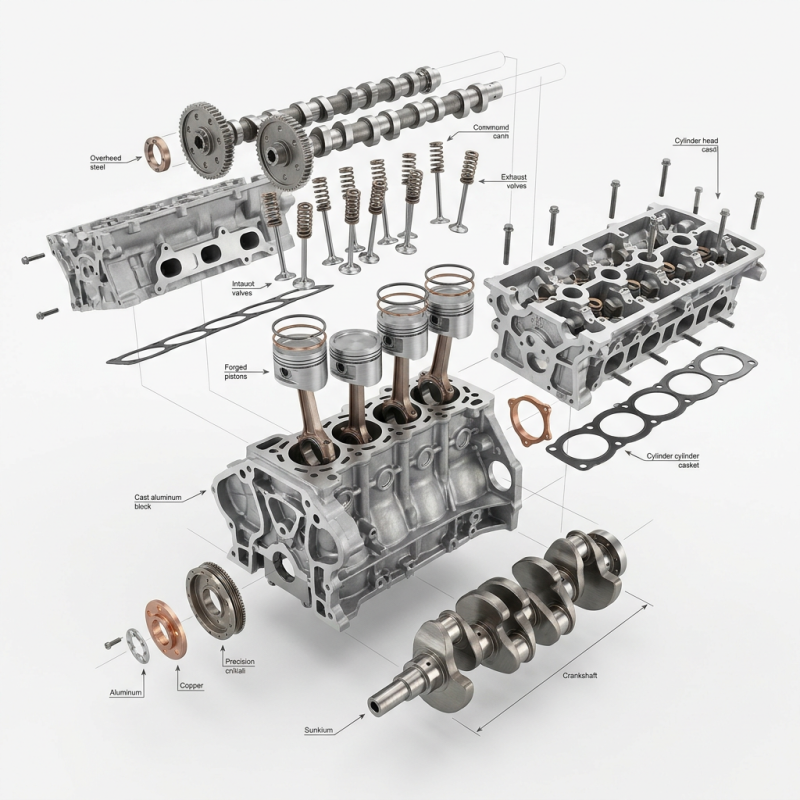
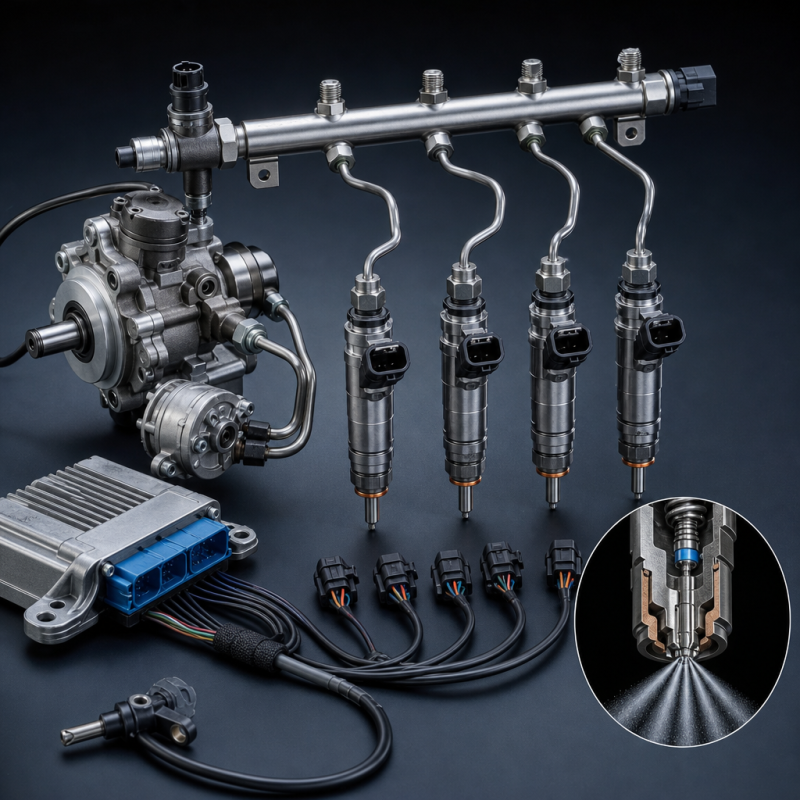
In-cylinder optimization represents the primary pathway and offers the highest return on investment; its goal is to maximize the conversion of fuel chemical energy into indicated work within the combustion chamber. This approach can be categorized into three main areas: combustion and injection, air intake and boosting, and friction and auxiliaries. Regarding combustion and injection, raising injection pressure above 2,500 bar—combined with smaller nozzle orifice diameters—atomizes fuel droplets more finely and shortens the mixing and combustion durations, thereby making the heat release process approach the ideal isochoric (constant-volume) cycle. Multiple injection strategies serve various functions: pilot injection improves ignition conditions while suppressing the rate of pressure rise and combustion noise; post-injection promotes late-stage soot oxidation and supports after-treatment system regeneration; and shaping the injection rate profile directly determines the characteristics of the heat release rate curve. Regarding air intake and boosting, variable-geometry turbochargers and two-stage boosting systems address low-speed response and boosting efficiency across all operating conditions, respectively; meanwhile, the Miller cycle and variable valve timing reduce negative compression work by altering effective compression and expansion ratios, and a high geometric compression ratio—combined with precisely matched combustion chamber geometry—further minimizes fuel consumption. Integrated thermal management coordinates charge-air and coolant temperatures to reduce heat transfer losses. Measures targeting friction and auxiliaries include low-tension piston rings, optimized cylinder liner honing patterns, diamond-like carbon (DLC) coatings, low-viscosity high-performance engine oil, variable-displacement oil pumps, and electronically controlled water pumps and fans. It is important to note that in-engine optimization is always constrained by the trade-off triangle involving nitrogen oxides (NOx), soot, and efficiency; thus, the effectiveness of these measures depends on the synergy between their combination and calibration.
The second pathway involves waste heat recovery and system electrification, shifting the focus from avoidable in-engine losses to unavoidable external losses; this is the primary route for pushing thermal efficiency beyond the 50% threshold from the current 45% range. Organic Rankine Cycle (ORC) systems can boost effective thermal efficiency by another 3 to 5 percentage points by extracting additional work from exhaust waste heat; key technical challenges include the selection of working fluids, heat exchange matching between evaporators and condensers, and maintaining expander efficiency across varying operating conditions. Power turbine compounding recovers kinetic energy from the exhaust, creating a two-stage energy utilization system alongside the turbocharger. Regarding electrification, electric boosting and motor assistance improve transient response while enabling the recovery and reuse of braking energy; intelligent thermal management utilizes electronically controlled thermostats, water pumps, and fans to provide on-demand cooling; and cylinder deactivation technology cuts off combustion in specific cylinders during partial-load operation, thereby increasing the load factor of the active cylinders and reducing both pumping and heat dissipation losses. A common characteristic of this pathway is a significant increase in system complexity and cost; consequently, it is better suited for applications involving high load factors and long operating hours, such as construction machinery and generator sets.
The third pathway addresses carbon emissions from the perspectives of fuel type and the full product lifecycle, complementing rather than replacing efforts to improve thermal efficiency. Low-carbon and zero-carbon fuels—such as hydrotreated vegetable oil (HVO), biodiesel, methanol, hydrogen, and ammonia—exhibit combustion characteristics distinct from those of diesel. Their use necessitates recalibration regarding injection system material compatibility, ignition delay, combustion speed, and lubricant suitability. Notably, the combustion of hydrogen and ammonia introduces new challenges related to nitrogen oxides (NOx) and ammonia slip, requiring integrated design with Selective Catalytic Reduction (SCR) systems and ammonia slip catalysts. Regarding emissions, combining in-cylinder control measures with an after-treatment chain—comprising a diesel oxidation catalyst (DOC), particulate filter, and SCR system—is essential to achieving carbon reduction targets while complying with regulatory limits. In terms of validation, on-board emission testing and real-driving emissions (RDE) monitoring extend emission control assessment from test-bench conditions to real-world operation, while digital twin technology and model-based calibration enable the joint optimization of thermal management, injection, and after-treatment parameters. Overall, a viable technical roadmap follows a sequence of prioritizing in-cylinder measures, followed by waste heat recovery, and finally fuel substitution, all aligned with the phased evolution of emission regulations. Since the benefits of any single technology are limited, true differentiation arises from the synergistic integration of multiple components and the ability to maintain stable performance across the entire operating range.
jianming machinery