The role of the control module in the engine

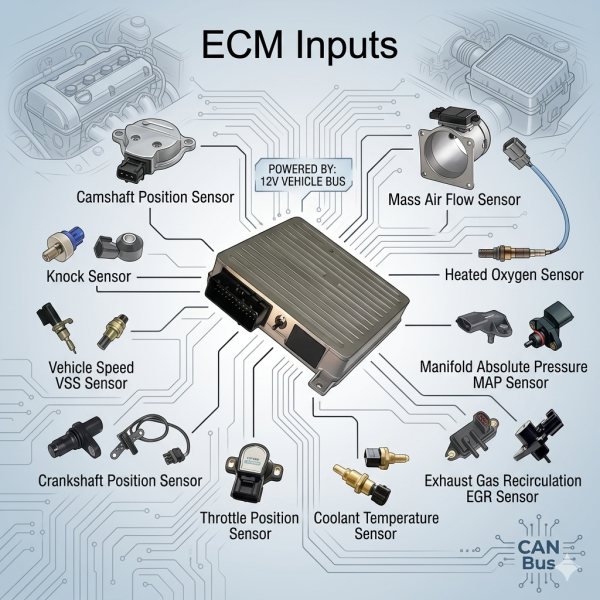
The Engine Control Module (ECU/ECM), as the digital brain of the modern internal combustion engine, primarily functions to reconstruct the engine’s internal microscopic thermodynamic state in real time by constructing a highly sensitive and interference-resistant electrical signal furnace. It utilizes an array of sensors deployed in key engine components—including a crankshaft position sensor with micro-resolution, an intake manifold absolute pressure sensor to capture airflow pulsations, and a wide-range oxygen sensor to monitor the concentration of microscopic molecules in exhaust gas—constantly processing massive amounts of analog physical variables. Upon receiving these chaotic and weak electrical signals, the signal conditioning circuitry and high-frequency analog-to-digital converter within the control module execute rigorous low-pass filtering and noise reduction algorithms, perfectly eliminating electromagnetic disturbances caused by high-voltage ignition, mechanical impacts, and the opening and closing of solenoid valves within the silicon-based chip. This highly integrated digital sensory nervous system not only provides a clean and reliable data stream for subsequent computing power output but also enables the modern engine to achieve a physical leap from “purely mechanical action” to “digital twin control.”
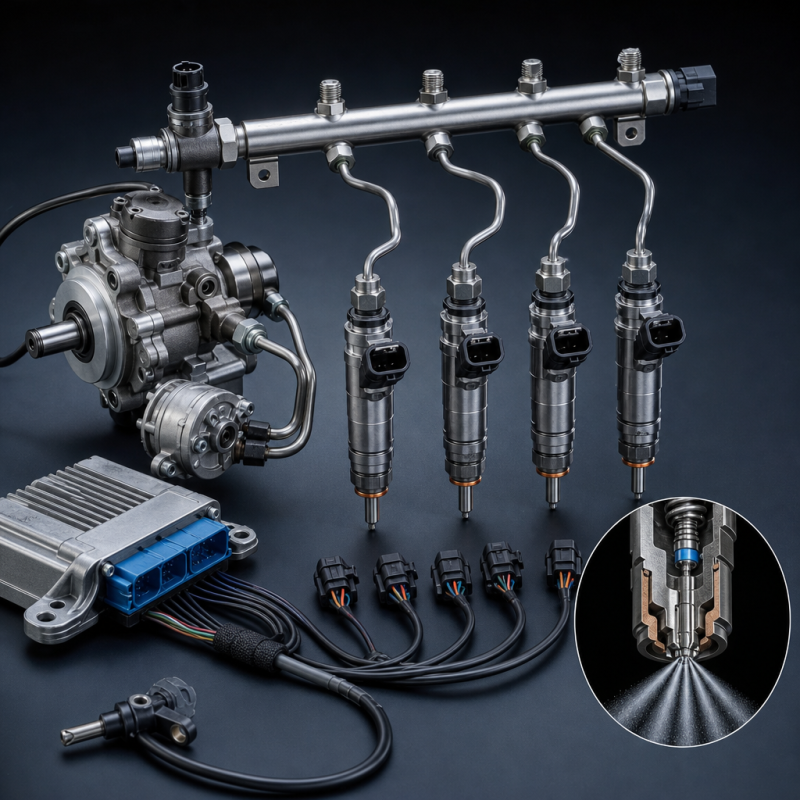
After real-time cleaning and alignment of massive amounts of sensor data, the control module, relying on its core processor’s nested three-dimensional spatial data matrix and transient dynamics algorithms, solves and physically manifests the optimal thermodynamic strategy within microseconds. The control module uses the current engine speed and load as bidirectional index coordinates, performing high-speed linear interpolation retrieval in a multi-dimensional table containing basic injection pulse width, ignition advance angle, and target boost pressure. Furthermore, it utilizes built-in transient compensation algorithms such as the average value model to predict the aerodynamic lag caused by changes in electronic throttle opening, accurately calculating the amount of fuel film adsorbed on the intake manifold wall, thus outputting drive commands to the actuators at speeds exceeding physical lag. Upon receiving digital commands from the processor, the powerful internal power field-effect transistor array instantly releases peak currents of tens of amperes, driving the piezoelectric crystal of the high-pressure common rail injector to undergo micron-level deformation, injecting fuel into the cylinder at supersonic speeds. Simultaneously, in coordination with the servo variable valve timing solenoid and electronic wastegate, the cold digital code is physically manifested into a powerful mechanical torque output.
Beyond its ultimate control over a single power unit, the control module is deeply embedded in the vehicle’s controller network topology, acting as a collaborator in global distributed game theory and a guardian of self-redemption throughout its entire lifecycle. It maintains high-frequency communication with the transmission control module and vehicle stability system hundreds of times per second via a high-density twisted-pair bus. During transmission upshifts, it proactively cuts off fuel and reduces torque to soften mechanical shocks, or forcibly closes the throttle to reconstruct physical friction balance when tires slip. Simultaneously, facing the inevitable hardware wear and carbon buildup during tens of thousands of hours of engine operation, the control module utilizes an adaptive learning mechanism of short-term and long-term fuel trim to solidify mechanical aging deviations into non-volatile memory for lifelong physical compensation. Furthermore, in the event of catastrophic mechanical failures such as complete sensor short circuits or loss of oil pressure, the OBD-II fault-tolerant defense chain embedded within the control module is instantly activated, immediately switching to a “limp mode” based on a substitution algorithm and limiting maximum speed, thus constructing a final physical redundancy to ensure the core mechanical structure is not completely destroyed.
jianming machinery