Engine structure

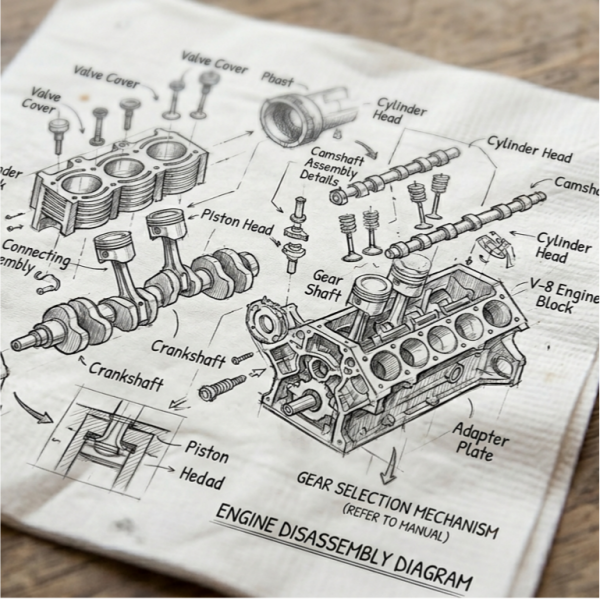
From an engineering physics perspective, an engine’s structure is not simply a collection of parts, but a highly integrated combination of a thermodynamic pressure vessel and a power transmission mechanism. To maintain structural stability and achieve energy conversion during thousands of violent explosions per minute, the engine’s construction is typically divided into two main mechanisms (fixed engine block and reciprocating motion mechanism) and five major systems (for diesel engines).
I. Fixed Engine Block Components: The Engine’s “Skeleton” The engine block components are the supporting foundation for all moving parts of the engine and must possess extremely high thermal stability and rigidity.
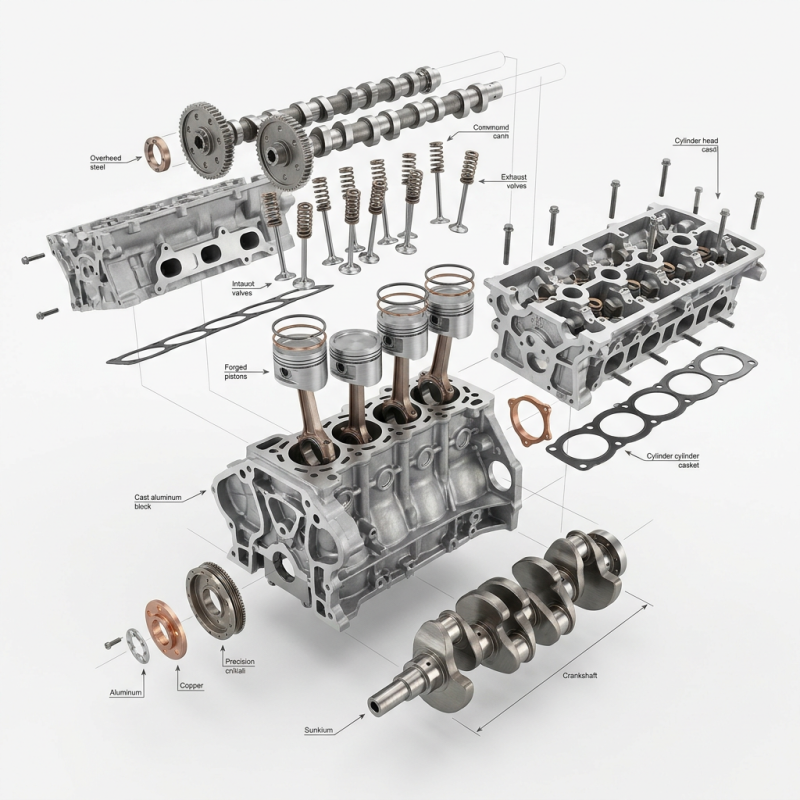
Cylinder Head: Seals the upper part of the cylinder and, together with the piston top, forms the combustion chamber. It integrates intake and exhaust ports, and spark plug (gasoline engine) or injector (diesel engine) mounting holes.
Cylinder Block: The main body of the engine. It has internally machined cylinder bores for the piston’s reciprocating motion; the inner wall is also cast with complex cooling water jackets and oil passages for thermal management.
Oil Pan: Located at the bottom, it stores lubricating oil, seals the crankcase, and assists in heat dissipation.
II. Reciprocating Motion Mechanism: The “Heart” of Energy Conversion
This is the physical core that converts the chemical energy of fuel into mechanical rotational torque, mainly composed of the crankshaft and connecting rod mechanism.
Piston Assembly: Directly bears the pressure of combustion gas explosions. Piston rings play a crucial role in sealing the combustion gases and scraping away excess lubricating oil.
Connecting Rod Assembly: Transmits the thrust on the piston to the crankshaft. It acts as a lever, converting the linear motion of the piston into the rotational motion of the crankshaft.
Crankshaft & Flywheel Assembly: The crankshaft is the most important power output shaft of the engine, and it uses counterweights to offset vibrations. The flywheel utilizes rotational inertia to maintain smooth engine operation during auxiliary strokes that do not produce work.
III. Five Major Systems: Life Support and Functional Coordination
To ensure the continuous and stable operation of the above-mentioned mechanisms, five major systems must work in tandem:
Valvetrain: Like the engine’s “breathing passage.” Composed of the camshaft, valves, springs, and tappets, it is responsible for periodically opening the intake valves to draw in air and opening the exhaust valves to expel exhaust gases.
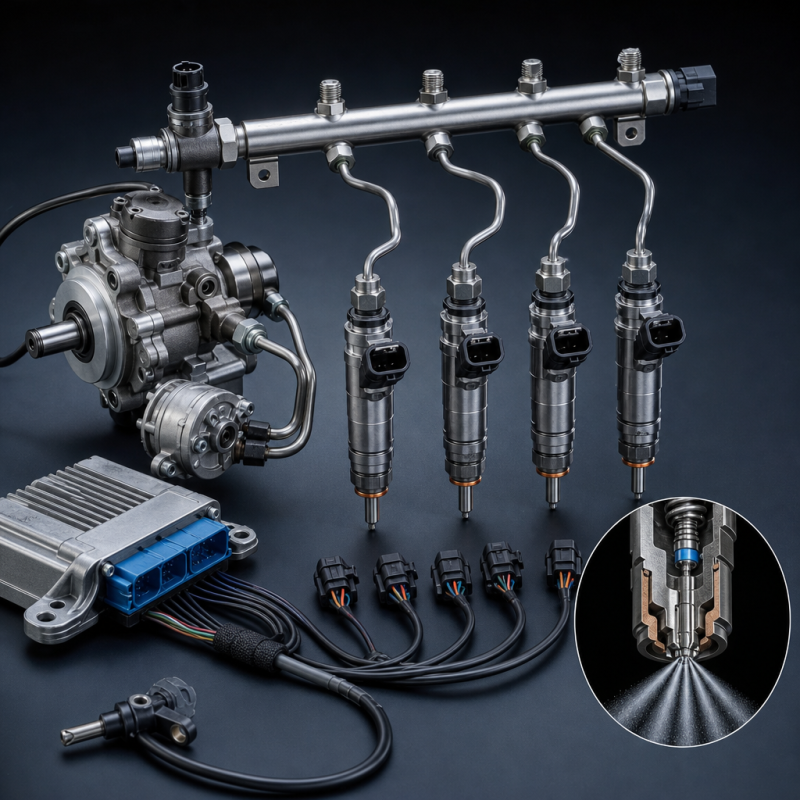
Fuel System: Responsible for precisely injecting fuel into the cylinders according to the load. Modern engines mostly use high-pressure common rail systems, with pressures reaching over 2000 bar.
Lubrication System: Delivers lubricating oil to friction surfaces (such as bearings and cylinder walls) via an oil pump, forming a hydrodynamic oil film several micrometers thick, converting dry friction into fluid friction.
Cooling System: Utilizes a water pump to drive the circulation of coolant, carrying away excess heat generated by combustion. Heavy-duty engines are usually also equipped with an oil cooler.
Starting System: The starter motor drives the crankshaft to rotate through gears until the engine can start autonomously through combustion.