Perkins 1106D-E70TA Engine – Technical Overview and Service Guide


The Perkins 1106D-E70TA is a 7-liter, six-cylinder, turbocharged and air-to-air aftercooled diesel engine developed for heavy-duty industrial and off-highway applications.
As part of the Perkins 1100D Series, it represents the evolution of Perkins’ mid-range power units — combining mechanical robustness with electronic precision.
This engine is widely used in excavators, loaders, harvesters, compressors, and generator sets where high torque, continuous output, and long service life are essential.
1. Engine Overview
The Perkins 1106D-E70TA (also identified as 1106D-70TA) has a displacement of 7.01 liters, with a six-cylinder inline configuration and a water-cooled system.
It is a four-stroke, direct-injection engine equipped with a turbocharger and an air-to-air intercooler to optimize airflow and reduce intake temperature.
Rated power output ranges from 116 to 205 kilowatts, or approximately 156 to 275 horsepower, at 2200 revolutions per minute, while peak torque reaches about 1250 newton-meters at 1400 rpm.
This engine meets EU Stage IIIA and EPA Tier 3 emission standards, providing a balance between performance and emission control without the complexity of a DPF or SCR system.
The engine’s design focus is durability, high torque rise, and fuel efficiency, making it suitable for equipment that must operate for long hours in harsh environments.
2. Structure and Construction
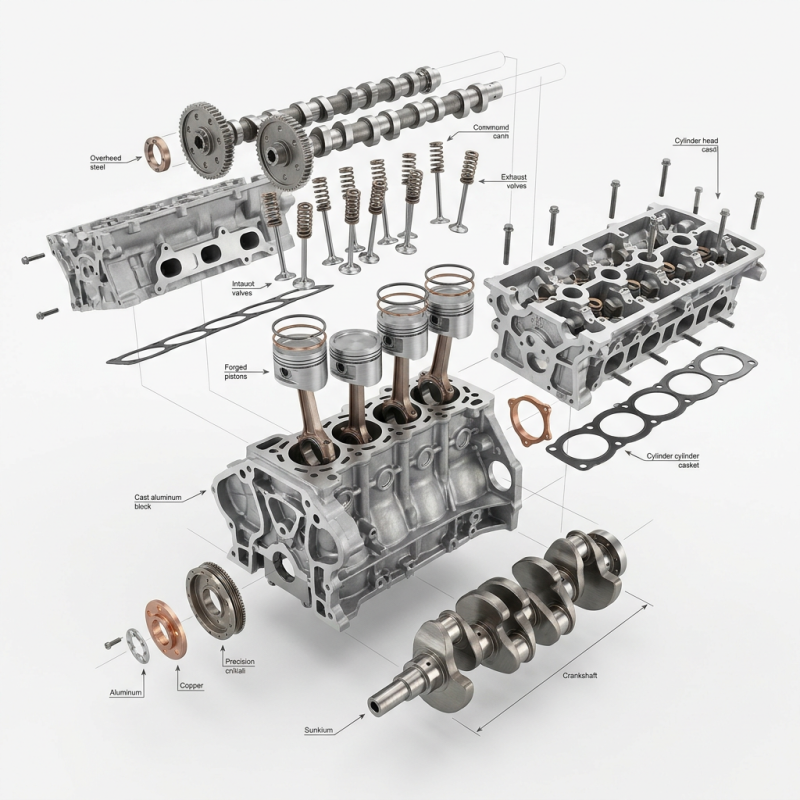
The 1106D-E70TA uses a cast-iron monoblock structure for maximum rigidity and strength.
Each of its six cylinders has replaceable wet liners, allowing easy overhaul and consistent cooling around the combustion chamber.
A cast-iron cylinder head with four valves per cylinder provides efficient airflow and combustion, improving both torque and fuel economy.
The forged-steel crankshaft is supported by seven main bearings, ensuring low vibration and long-term dimensional stability.
Aluminum pistons with internal oil-cooling galleries maintain thermal balance under high load, while the gear-driven camshaft guarantees accurate timing and eliminates the need for belts or chains.
This combination of a robust bottom end and efficient top end gives the 1106D-E70TA the durability to handle high continuous loads for thousands of operating hours.
3. Fuel System and Combustion Technology
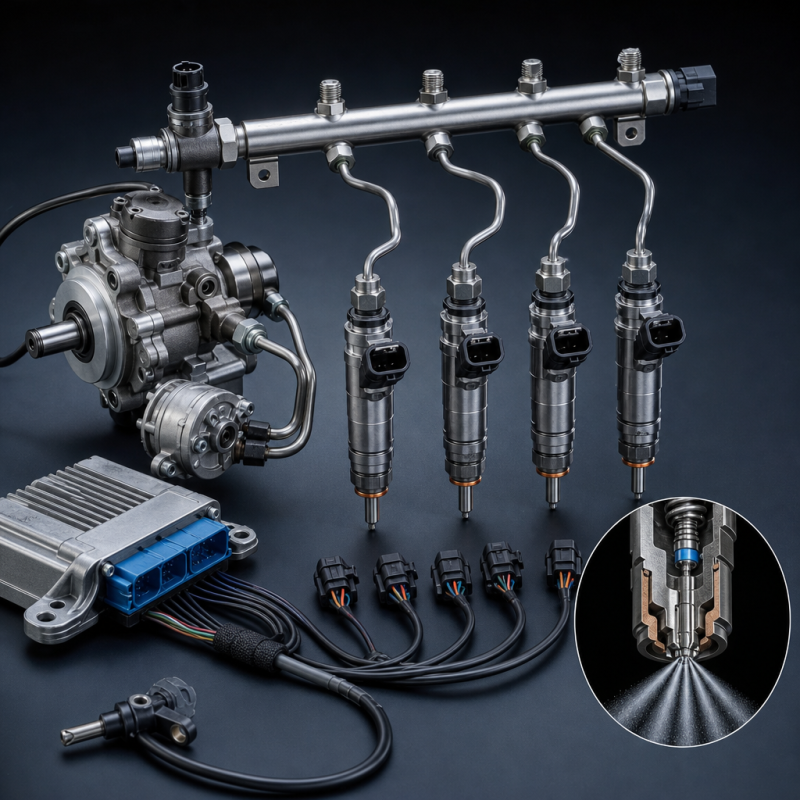
The 1106D-E70TA employs a high-pressure mechanical-electronic fuel system, often described as a hybrid between mechanical injection and electronic control.
Fuel is pressurized to around 1600 bar and delivered directly into each cylinder through a common-rail or MEUI-type injection system, depending on variant.
The Electronic Control Module (ECM) manages injection timing, duration, and pressure to optimize combustion efficiency.
This precise control enables lower fuel consumption, reduced smoke, and improved throttle response compared to fully mechanical systems.
The ECM also adjusts parameters for altitude and ambient temperature, ensuring reliable performance under varying site conditions.
Fuel passes through a dual-stage filtration system — a primary water separator and a secondary fine filter — to protect the high-pressure pump and injectors.
Regular filter maintenance is essential, as the system’s precision components are sensitive to contamination.
4. Turbocharging and Air Management
A waste-gated turbocharger increases air pressure entering the cylinders, enhancing torque output and maintaining efficient combustion even at low engine speed.
Compressed air passes through an air-to-air intercooler, which lowers the temperature of the intake charge and increases oxygen density.
This results in better power delivery, lower exhaust temperatures, and reduced fuel consumption.
The intake system uses a two-stage dry-type air filter to ensure clean airflow, while the cast-iron exhaust manifold is designed for thermal expansion control and long-term durability.
The overall turbo-air system delivers a quick boost response, allowing the engine to maintain consistent torque under sudden load changes — a key advantage in heavy hydraulic and generator applications.
5. Cooling and Lubrication Systems
The 1106D-E70TA features a belt-driven centrifugal water pump that circulates coolant through the block and head.
A dual thermostat ensures stable operating temperatures between 82 and 95 degrees Celsius.
The coolant capacity is approximately 18 to 20 liters, depending on installation.
Only Perkins Extended Life Coolant (E-LC) or equivalent MB 325.0 specification fluid should be used to prevent liner corrosion and cavitation.
The lubrication system is full-flow, with a gear-driven oil pump, a spin-on full-flow filter, and an oil cooler integrated into the block.
Oil capacity ranges from 16 to 18 liters, depending on sump configuration.
Oil pressure at rated speed typically remains between 50 and 70 psi, ensuring stable lubrication even under heavy continuous load.
Perkins recommends lubricants meeting API CI-4 or CJ-4 standards, with viscosity grades suited to ambient temperature.
6. Performance Characteristics
The 1106D-E70TA is designed for high efficiency and low specific fuel consumption.
At full rated load, fuel use averages around 200 grams per kilowatt-hour, which represents strong efficiency for a 7-liter mechanical-electronic diesel.
The torque curve is broad and flat, with maximum torque available from 1300 to 1600 rpm.
This allows machines using this engine to maintain consistent performance even under rapid load variation, such as excavators or power units driving variable hydraulic pumps.
Noise and vibration are well controlled thanks to balanced rotating components and multi-stage injection timing.
7. Electrical and Control System
The engine operates on a 12-volt or 24-volt electrical system.
The Electronic Control Module (ECM) communicates through the CAN J1939 protocol, enabling integration with modern machine control systems.
The ECM controls injection timing, fuel delivery, boost pressure, and idle speed.
It also monitors coolant temperature, oil pressure, and sensor feedback to optimize performance.
Diagnostic information and service intervals can be accessed through the Perkins Electronic Service Tool (EST), allowing easy fault analysis and calibration updates.
8. Maintenance and Service
The Perkins 1106D-E70TA is built for long service intervals and low cost of ownership.
Oil and fuel filters should be replaced every 500 operating hours, or sooner under severe conditions.
The air filter should be inspected every 250 hours and replaced if clogged.
Coolant should be changed every two years or 4000 hours, whichever comes first.
Valve clearances should be checked approximately every 1000 hours.
All major service points — oil filler, filters, and dipstick — are located on one side of the engine for convenience in confined engine bays.
With correct maintenance and quality consumables, the engine typically exceeds 15,000 hours before major overhaul.
9. Common Service Observations
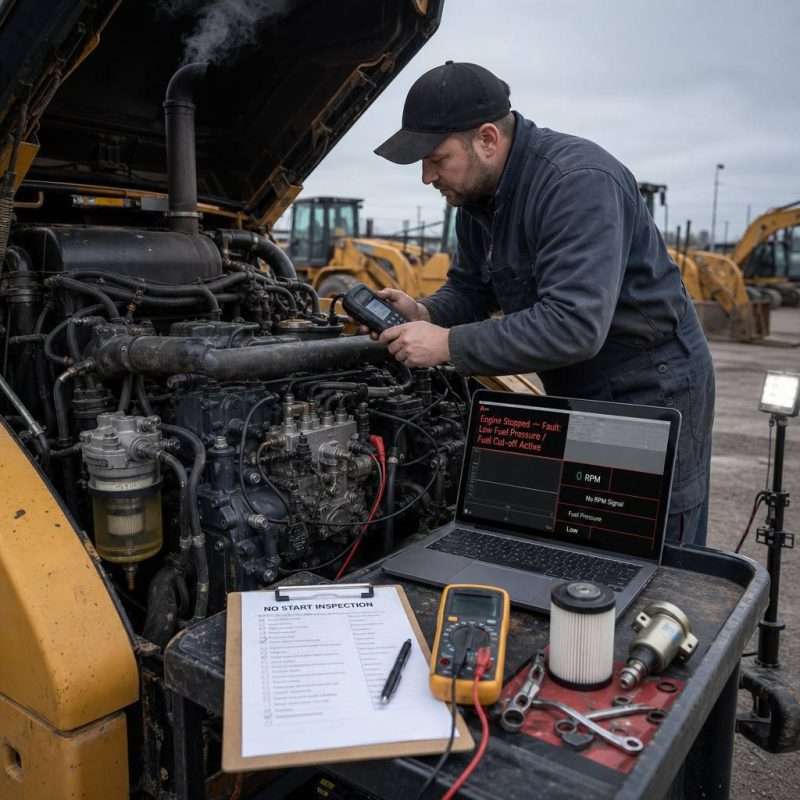
The 1106D-E70TA has an excellent reliability record, but several predictable issues can arise in long-term field use.
Fuel pump or injector wear is usually caused by poor fuel quality; preventive measures include using clean diesel and timely filter replacement.
Turbocharger oil leakage often results from missed oil changes or blocked return lines.
Overheating may occur if the radiator is obstructed or coolant concentration is incorrect.
Electrical faults such as random ECM errors can stem from poor grounding or moisture in connectors.
Minor oil seepage from front or rear seals may appear after long operation and should be checked for crankcase ventilation blockage.
When maintained properly, these issues are rare and easily corrected.
10. Overhaul and Service Life
The 1106D-E70TA’s wet-liner configuration allows in-frame rebuilds without removing the block from the machine.
During overhaul, liners, pistons, bearings, and gaskets are replaced, restoring factory compression and oil control.
Crankshaft and camshaft wear should be checked within tolerance limits.
After reassembly, the oil system must be primed before startup to prevent dry bearing contact.
When rebuilt with genuine components, this engine routinely achieves a second operational life exceeding 25,000 total hours.
11. Applications
The 1106D-E70TA powers a wide range of equipment across industries.
In construction, it is found in 20- to 35-ton excavators, wheel loaders, bulldozers, and road rollers.
In agriculture, it drives large tractors, sprayers, and combines.
In power generation, it is widely used in 150 to 250 kVA generator sets.
It also serves as a power unit for compressors, pumps, drilling rigs, and other continuous-duty machinery.
The engine’s combination of torque, fuel efficiency, and rebuildability makes it a preferred choice for OEMs such as JCB, Sany, XCMG, and FG Wilson.
12. Conclusion
The Perkins 1106D-E70TA remains a benchmark among 7-liter industrial diesels — powerful, reliable, and efficient.
Its turbocharged and after-cooled design delivers exceptional torque and low fuel consumption, while its mechanical-electronic control system ensures compliance with emission standards without sacrificing simplicity.
For engineers and fleet operators, understanding its fuel, air, and lubrication systems ensures maximum uptime and predictable maintenance cycles.
When serviced with genuine Perkins parts, clean fuel, and quality lubricants, the 1106D-E70TA consistently delivers the durability and performance that define the Perkins brand — power built to last in the world’s toughest working environments.