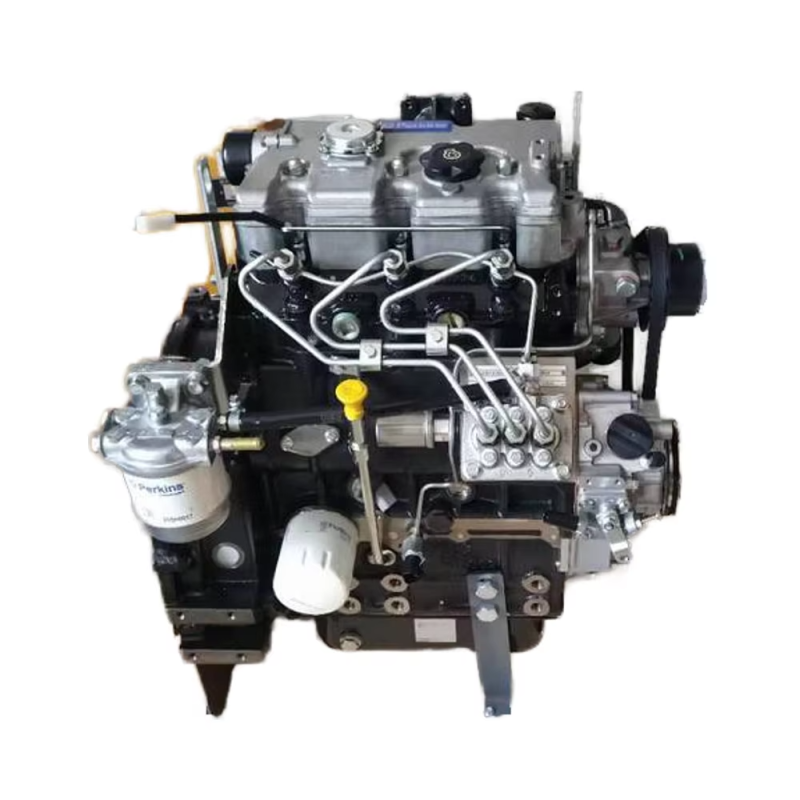
Perkins 403D-15 Engine Technical Analysis

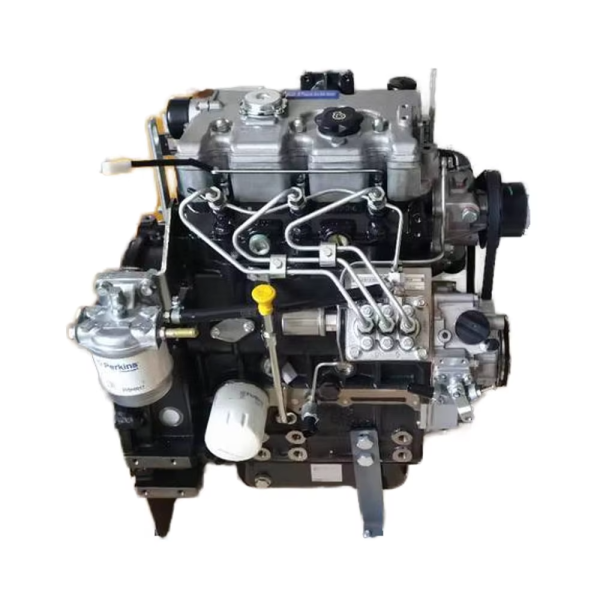
The Perkins 403D-15, a typical 1.5-liter inline three-cylinder naturally aspirated diesel engine, leverages the “redundancy” of its large displacement design to compensate for the inherent power pulse gaps of the three-cylinder architecture. During the thermodynamic cycle, the indirect injection swirl chamber technology employed in this engine is not simply a noise reduction measure, but a mixing strategy highly dependent on fluid kinetic energy conversion. When the piston reaches near top dead center of compression, nearly half the air in the cylinder is compressed into a spherical pre-combustion chamber, which occupies only about 3% of the total volume. This dramatic volume collapse induces extremely high-velocity air swirls within the pre-combustion chamber. At this point, fuel particles injected by the mechanical pump undergo initial ignition at the center of the swirl, and the resulting expansion pressure injects the unburned mixture back into the main cylinder, creating a highly penetrating scavenging effect. This combustion logic physically mitigates the mechanical shock caused by the excessively rapid pressure rise rate (dp/dt) in diesel engines, allowing the 403D-15 to reliably output a peak torque of 96 Nm at a low speed range of 1800 RPM. This results in superior speed stability and “anti-stalling” resilience compared to other small-displacement engines in its class during sudden changes in micro-hydraulic mechanical load.
In the underlying mechanical structure’s maintenance logic, the calibration of the 403D-15’s inline cassette injection pump is the soul of the entire powertrain’s precision control. Because this engine completely abandons dynamic timing correction by the electronic control unit (ECU), its injection start point is completely locked at the geometric coincidence point between the crankshaft phase and the pump body mounting position. In engineering practice, this means that the adjusting shim under the pump body is not only a sealing element but also a precision timing compensation tool. Every 0.05mm change in the shim thickness directly alters the instantaneous phase of the gauging orifice closure, resulting in an approximately 1-degree shift in the injection advance angle. Improper timing adjustment can cause the combustion center to deviate from the optimal stress point on the piston crown, leading to excessive heat accumulation in the cylinder head exhaust valve seat area and accelerating thermal fatigue spalling of the material. Therefore, during fuel system overhauls, technicians must use a high-precision dial indicator to measure the piston’s true top dead center and perform compensation calculations using the EP code on the engine nameplate. This purely mechanical static calibration, while demanding extremely high precision from the technician, also gives the engine absolute survivability in environments lacking electrical power and under extreme electromagnetic interference conditions.
To address the thermal management needs after prolonged high-load operation, the maintenance focus of the 403D-15 must shift from simply “changing fluids” to monitoring the chemical balance of the cooling system. Because the heat flow of the indirect injection system is extremely concentrated inside the cylinder head, the water jacket space around the pre-combustion chamber insert is highly susceptible to cavitation and chemical buildup. Once the antifreeze loses its original surface tension control and anti-corrosion properties, a micron-sized insulating layer will form between the cylinder head body and the inserts. This causes the local temperature to momentarily exceed the material’s critical point of 300°C, inducing physical deformation of the valve seats or stress cracks in the cylinder head bridge area. Furthermore, considering the long-stroke design of the 1.5L three-cylinder engine, the crankcase lubricating oil film not only withstands shear pressure but also needs to carry away the enormous heat load from the piston head. It is recommended that maintenance personnel strictly adhere to the 500-hour oil change interval and conduct a fuel system check to prevent “fuel dilution of oil” due to poor fuel atomization. This phenomenon rapidly reduces the kinematic viscosity of the oil, causing boundary friction in the main bearings during high torque output, resulting in irreversible mechanical damage. Only through precise control of these deep physical parameters can we ensure that this miniature power core maintains its peak rated horsepower output throughout thousands of hours of operation.