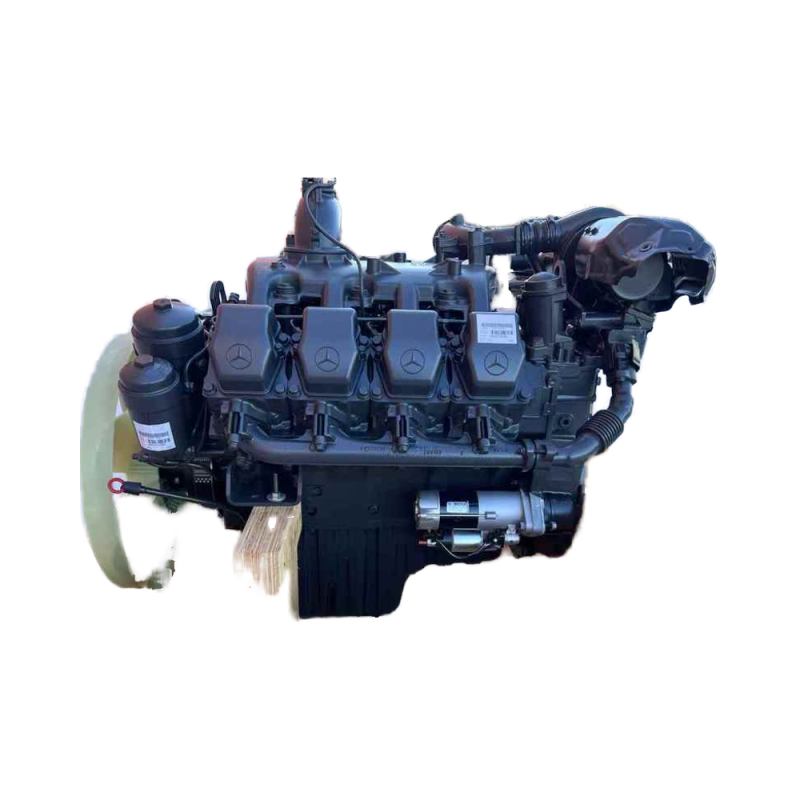
Benz OM502LA Engine – Technical Analysis, Structure, and Service Guidelines


The Mercedes-Benz OM502LA engine is a V8 diesel engine derived from the same heavy-duty engine family as the OM501LA. It represents an evolution in output and robustness, engineered for applications requiring higher power, increased torque, and continuous load operation. The OM502LA powers Mercedes-Benz Actros 18xx, 25xx, and 33xx trucks, as well as industrial and off-road machinery.
This technical overview provides a detailed examination of the OM502LA engine structure, internal mechanisms, operating principles, and maintenance requirements. It is written for engineers, mechanics, and professional rebuilders who require technical precision and system-level understanding.
1. Engine Overview
The OM502LA is an eight-cylinder, 90-degree V-type diesel engine with a total displacement of approximately 15.9 liters. The “OM” prefix identifies it as a Mercedes diesel engine (“Oelmotor” in German), while the “L” and “A” denote intercooling and turbocharging, respectively.
It is designed for continuous-duty operation under extreme load. The engine’s architecture emphasizes structural rigidity, vibration balance, and long service intervals. Compared to the OM501LA V6, the OM502LA provides increased torque and smoother power delivery, while maintaining similar modular components such as injectors, pumps, and sensors.
The power range extends from 350 to 440 kilowatts, equivalent to roughly 476 to 598 horsepower, with maximum torque between 2,300 and 2,800 newton-meters at around 1,080 revolutions per minute. The engine meets Euro II and Euro III emission standards in its earlier forms, with later adaptations capable of Euro IV through SCR aftertreatment.
2. Mechanical Structure
2.1 Cylinder Block and Crankshaft
The OM502LA block is constructed from high-strength cast iron with a deep skirt design and cross-bolted main bearings. The crankshaft is forged steel, supported by five main bearings with generous oil galleries for pressure lubrication. The firing order (1-5-4-2-6-8-3-7) ensures uniform load distribution across the crankshaft and smooth torque output.
Each cylinder liner is wet, replaceable, and sealed with triple O-rings for reliable coolant and oil separation. This modular design allows in-frame overhaul and simplifies rebuilds in field conditions.
2.2 Cylinder Head and Valve Mechanism
The engine uses two separate V-banks, each consisting of four cylinders with an individual cylinder head. Each cylinder has four valves operated by pushrods and rocker arms. The camshaft is centrally located between the banks and driven by a front gear train.
Valve timing is optimized for high torque and low exhaust emissions. The typical valve clearance specification (cold) is 0.30 mm for intake and 0.50 mm for exhaust. The use of a single camshaft and mechanical linkage reduces frictional losses and simplifies service procedures compared to dual-overhead-cam designs.
2.3 Pistons and Connecting Rods
The pistons are made of high-temperature-resistant aluminum alloy with steel inserts for the top ring groove. The connecting rods are forged steel, fracture-split for precise bearing alignment. Each piston features an internal cooling gallery supplied by under-piston oil jets. The compression ratio remains around 17.25:1, achieving efficient combustion and high cylinder pressure capability without detonation.
3. Fuel System
The OM502LA employs the same unit pump injection system (UPS) as its V6 counterpart. Each cylinder has an independent pump element actuated mechanically by the camshaft and electronically controlled by a solenoid valve.
Injection pressure can exceed 1,600 bar, with precise timing managed by the electronic control unit (ECU). The ECU adjusts injection quantity, duration, and start angle based on load, speed, and sensor feedback. This design minimizes fuel line volume, improving response and reducing hydraulic delay.
Advantages of the UPS system include:
- Precise metering under varying load conditions
- High resistance to fuel contamination compared to common rail
- Simplified mechanical layout without high-pressure rails
However, calibration of unit pumps requires high accuracy. Any deviation in plunger clearance or solenoid timing can result in uneven fueling, rough idling, or high exhaust temperatures.
4. Turbocharging and Intercooling
The OM502LA features twin turbochargers in most configurations. Each bank of four cylinders is served by its own turbocharger, which ensures symmetrical boost pressure and reduced exhaust back pressure.
Compressed air from both turbos passes through a common air-to-air intercooler, lowering intake temperature and increasing air density. Typical boost pressure ranges from 1.6 to 2.0 bar depending on calibration and load. The system is equipped with wastegate actuators to prevent excessive boost.
The twin-turbo layout improves throttle response and equalizes thermal loading across the cylinder banks, extending turbine life and maintaining balanced air-fuel ratios under full load.
5. Lubrication and Cooling Systems
The lubrication system is fully pressurized, using a gear-driven oil pump mounted at the front of the engine. Oil flows through full-flow and bypass filters, then through the main gallery feeding bearings, camshaft, and turbochargers. The total oil capacity ranges between 40 and 45 liters depending on sump configuration.
An oil cooler, integrated into the block, uses engine coolant to stabilize oil temperature around 90°C. The system includes piston cooling jets and a fine filtration bypass circuit for soot management.
The cooling circuit consists of a centrifugal water pump, thermostat, and high-capacity radiator. Coolant operates between 82 and 95°C. Proper use of corrosion inhibitors and cavitation additives is mandatory, as liner erosion is a known risk in large V engines.
The system design maintains even temperature distribution across both banks to prevent warping and thermal fatigue.
6. Electronic Control and Diagnostics
The electronic control unit governs injection events, boost regulation, and idle stability. The ECU continuously monitors coolant temperature, boost pressure, fuel temperature, oil pressure, and crankshaft speed.
It operates under CAN communication protocol and interacts with the vehicle’s central control system. Diagnostic faults are stored in memory and can be accessed using Mercedes-Benz STAR Diagnosis or compatible OBD-II devices.
Common diagnostic references include:
- Injection circuit failure on individual unit pumps
- Boost deviation between left and right turbochargers
- Sensor circuit open or short errors
- Accelerator pedal position mismatch
Accurate fault interpretation requires correlating live data with mechanical inspection. In practice, many “injection fault” warnings are caused by connector corrosion or poor grounding rather than actual pump failure.
7. Performance Characteristics
The OM502LA develops between 350 and 440 kilowatts of power at approximately 1,800 rpm and torque up to 2,800 newton-meters at 1,080 rpm. The wide torque plateau ensures constant tractive effort across a broad speed range, a key advantage in heavy-haul applications.
The specific fuel consumption is approximately 195–205 g/kWh, depending on load and calibration. Thermal efficiency remains above 42%, which is competitive for its class. The engine demonstrates excellent torque rise under transient acceleration, maintaining stable boost and combustion balance between banks.
Emission compliance in the Euro III version is achieved through optimized injection timing, turbocharging efficiency, and exhaust gas recirculation. Later OM502LA versions integrate SCR (Selective Catalytic Reduction) systems for Euro IV compliance.
8. Common Operational Issues
Like most large-displacement V engines, the OM502LA experiences predictable wear patterns and failure modes under long-term heavy use.
Frequent issues include:
- Oil leakage from turbocharger seals or rocker covers due to prolonged thermal cycling.
- Injector imbalance resulting from solenoid wear or internal pump plunger scuffing.
- Overheating due to coolant pump inefficiency or radiator blockage.
- Turbocharger failure from oil contamination or restricted lubrication flow.
- White smoke at cold start, often caused by uneven compression or fuel atomization issues.
Preventive diagnostics such as oil analysis, cylinder compression testing, and exhaust temperature monitoring are essential to predict early-stage failures.
Technicians should also monitor synchronization between the two turbochargers. Unequal boost pressure may indicate wastegate sticking or exhaust manifold leaks.
9. Maintenance Guidelines
Routine maintenance ensures engine reliability and minimizes unplanned downtime. Engine oil and filters should be changed every 25,000 kilometers, or earlier under severe conditions. Fuel filters require replacement every 40,000 kilometers. The air intake system must be cleaned and inspected frequently, especially in off-road environments.
Valve clearance adjustment and injector synchronization are recommended every 120,000 kilometers. Coolant should be renewed every two years, maintaining a 50% antifreeze mixture. Turbocharger and exhaust systems should be inspected every 150,000 kilometers for shaft clearance and housing cracks.
When performing service, technicians must always prime the lubrication system before restarting after oil changes or rebuilds. Failing to do so can cause bearing seizure during dry start.
10. Overhaul and Rebuild Considerations
A full engine rebuild of the OM502LA requires strict adherence to Mercedes-Benz specifications. Disassembly must be clean, components tagged, and all tolerances measured. Cylinder wear limit is around 0.15 millimeter, and crankpin ovality must remain below 0.03 millimeter.
All seals, gaskets, and bearings must be replaced. Torque procedures include multi-step tightening and angular torque methods. Liner protrusion, bearing clearances, and valve seat concentricity must be checked carefully.
Before reassembly, all oil and coolant passages should be pressure-washed and blown dry. After assembly, the engine should be filled with break-in oil, cranked without fuel until pressure is established, and then started under light load for thermal stabilization.
11. Application and Durability
The OM502LA is widely used in Actros heavy-duty trucks, construction mixers, special-purpose military vehicles, and industrial powerpacks. Its robust V8 configuration and independent bank control allow for exceptional balance and durability. In normal highway operations with correct maintenance, it can exceed one million kilometers before major overhaul.
In industrial or stationary use, service life is often measured in hours rather than distance, typically around 20,000–25,000 operating hours before rebuild. Proper oil analysis and early component inspection are the keys to maximizing uptime.
12. Technical Summary
The OM502LA demonstrates Mercedes-Benz’s engineering philosophy of combining mechanical precision with electronic control. It provides:
- High torque at low speed for heavy traction
- Twin turbocharging for smooth boost delivery
- Efficient unit-pump fuel system for reliability
- Strong cast-iron structure for thermal endurance
Its modular design allows parts interchangeability with the OM501LA family, simplifying inventory management for fleet maintenance and aftermarket suppliers. When serviced according to specification, it remains one of the most dependable diesel power units in its class.
Conclusion
The Mercedes-Benz OM502LA engine stands as a hallmark of European heavy-duty diesel engineering. Its V8 configuration, advanced fuel system, and optimized thermal management deliver the strength required for the most demanding commercial applications.
For engineers and mechanics, understanding the OM502LA at the system level—from fuel delivery to thermal dynamics—is the foundation of proper service and reliability assurance. Consistent maintenance, correct diagnostic methods, and adherence to Mercedes-Benz technical standards guarantee operational stability and long-term performance in every environment where power and endurance are required.
👉 For Mercedes-Benz OM502LA engines, spare parts or technical support, please visit jamiegz.com for professional solutions.