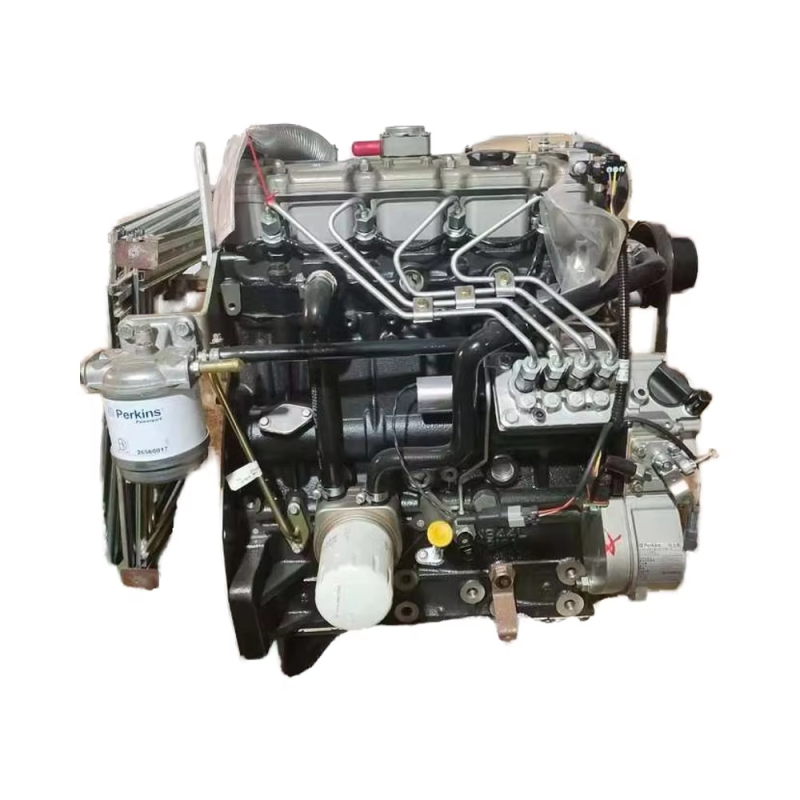
Perkins 404D-22T Diesel Engine Assembly Technical Analysis

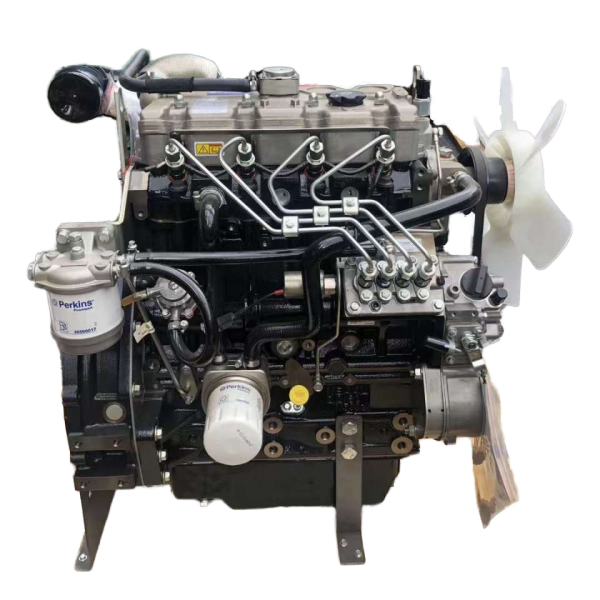
The Perkins 404D-22T is a landmark model in the series. The “T” in its suffix signifies the introduction of exhaust gas turbocharging technology, allowing for a significant leap in power density while maintaining almost identical physical mounting dimensions to the naturally aspirated version (404D-22). This 2.2-liter four-cylinder engine delivers approximately 45.5 kW (61 hp) at 2800 RPM, and more importantly, its peak torque soars to 189 Nm, an increase of approximately 32% compared to the naturally aspirated version. This power enhancement is not a simple matter of increasing pressure, but rather achieved through a precisely matched exhaust gas-driven turbocharger that forces a higher intake pressure, creating a more oxygen-rich mixture within the swirl chamber of the indirect injection (IDI) system, ensuring a more complete energy release of the fuel in a shorter effective time. This makes the 404D-22T the ideal heart for medium-duty telescopic forklifts, heavy-duty skid steer loaders, and industrial applications requiring power delivery at high altitudes.
From a thermodynamic management perspective, the combination of the vortex chamber (IDI) design and turbocharging presents unique engineering challenges for the 404D-22T. Due to the significant increase in mean effective pressure (BMEP) within the cylinder after turbocharging, the peak temperature at the end of the compression stroke also rises, placing stringent demands on the cylinder head’s resistance to thermal fatigue. To address this challenge, the 404D-22T strengthens its internal lubrication and cooling pathways, particularly employing forced oil nozzle cooling technology targeting the piston crown. This utilizes a high-pressure oil jet to absorb heat from the piston crown, preventing the risk of cylinder scoring due to excessive thermal expansion. Furthermore, the turbocharger in this model typically features a built-in wastegate that automatically adjusts exhaust flow based on intake manifold pressure, preventing over-boosting at high speeds. This mechanical feedback mechanism ensures that the engine maintains a stable air-fuel ratio across the entire speed range, while effectively suppressing the formation of nitrogen oxides (NOx), allowing it to maintain robust emission consistency without relying on complex electronic control systems.
In terms of maintenance logic, the 404D-22T places a new level of emphasis on “mechanical integrity.” Any minor intake leak or lubrication damage can escalate into a catastrophic failure due to the amplification effect of the turbocharger. For this engine, the lubrication quality of the turbocharger bearings is its lifeline: because the turbine shaft can reach tens of thousands of revolutions per minute under full load and is directly exposed to high-temperature exhaust gases, impurities in the engine oil or excessively long oil change intervals will cause the bearings to wear rapidly, leading to impeller scorching or even breakage. Simultaneously, for this type of indirect injection turbocharged engine, valve clearance calibration (0.20 mm for both intake and exhaust in cold conditions) becomes even more critical, as the airflow dynamic fluctuations caused by turbocharging have extremely low tolerance for valve sealing errors. In actual engineering operations, it is recommended that maintenance personnel pay special attention to the shutdown cooling process. That is, after long-term high-load operation, it is strictly forbidden to shut down the engine immediately. It is necessary to keep it at a low speed for 3-5 minutes to prevent the residual heat accumulated at the turbine shaft from causing the stationary engine oil to carbonize and coke. This is the key to ensuring that this powerful power unit can exceed 10,000 hours of operating life.