The role of the Cummins 4BT3.9 engine in actual industrial performance

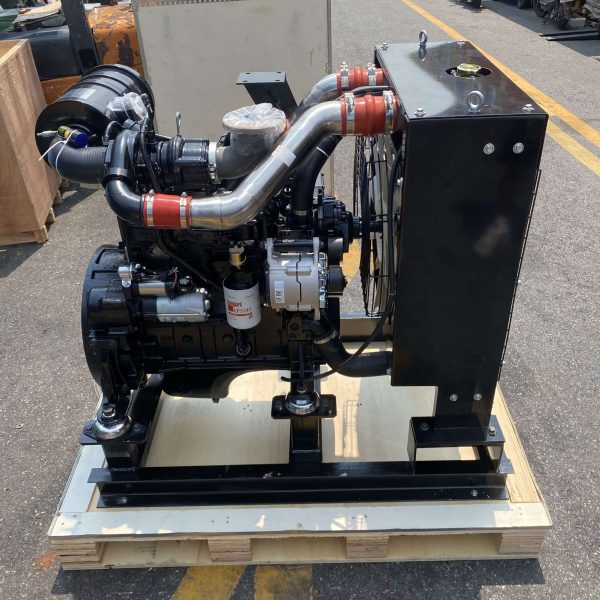
In industrial and construction applications, engine parameters are more than just numbers—they determine a machine’s performance under load, its operation in harsh environments, and the predictability of operating costs. The Cummins 4BT3.9 engine is renowned precisely because its core specifications are aligned with long-term real-world performance, rather than short-term peak output.
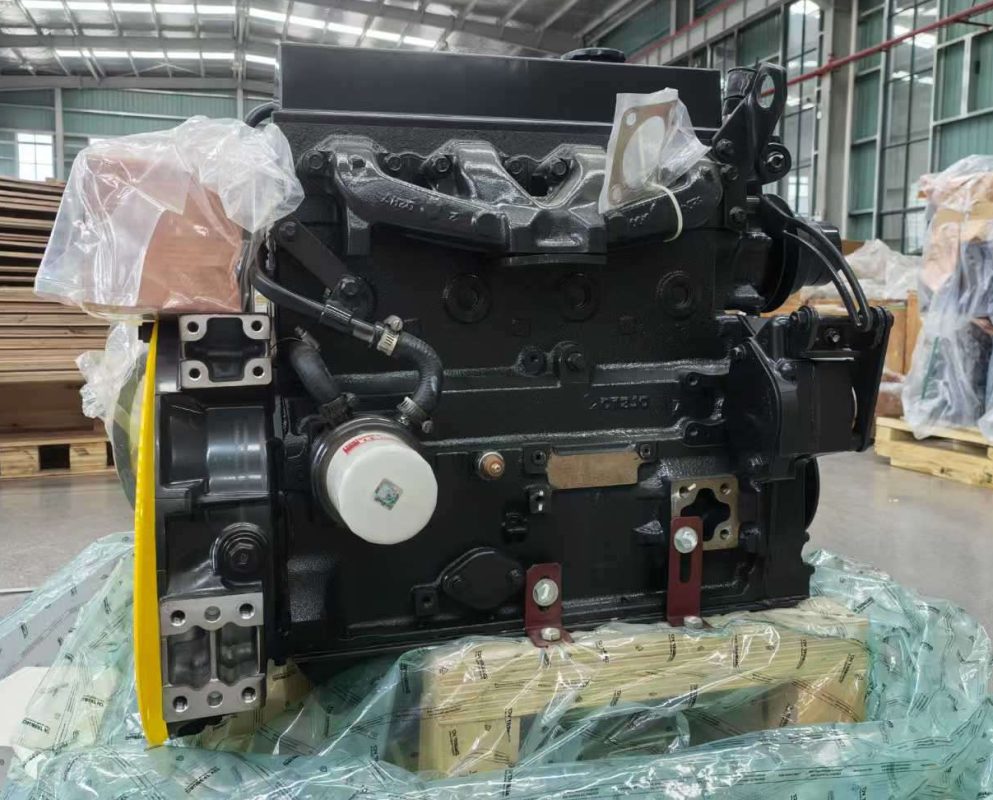
At the heart of the 4BT3.9 is a 3.9-liter inline four-cylinder engine. This configuration achieves a crucial balance between power density and mechanical stability. Compared to smaller displacement engines, the larger displacement allows the 4BT3.9 to produce usable torque at lower engine speeds, reducing the need for high-revving operation. From an engineering perspective, this directly reduces thermal stress, piston speed, and wear on rotating parts—key factors for extended service life.
Depending on configuration and application, the engine typically produces approximately 80–105 horsepower. However, more important than peak power is its strong low-to-mid-range torque curve, making the engine particularly suitable for hydraulic systems, compressors, and generator sets. Stable torque output ensures smoother load response, reduces fluctuations during sudden demand changes, and improves protection for downstream components such as pumps and alternators.
The 4BT3.9 engine features a 102 mm bore and 120 mm stroke, employing a long-stroke design. This geometry prioritizes torque output over high-speed output, thereby improving combustion efficiency and fuel utilization at operating speeds. The long-stroke layout also helps reduce operating noise and vibration, an advantage for both mobile machinery and stationary power units.
Fuel supply is handled by a mechanical direct injection system, typically paired with a Bosch or equivalent mechanical fuel pump. From a parameter perspective, this design eliminates the need for electronic control units and sensors. In practice, it allows the engine to adapt to different fuel qualities, maintain reliable cold-start performance, and simplify troubleshooting in areas lacking advanced diagnostic tools. For many users, the simplicity of this mechanical structure directly translates to less downtime and lower maintenance risks.
The compression ratio is typically around 17.5:1, ensuring both efficient combustion and good cold-start performance. This compression ratio ensures sufficient in-cylinder pressure for reliable ignition while avoiding excessive stress on the pistons and bearings, crucial for engines requiring sustained high-load operation.
The water-cooled cooling system maintains thermal stability over extended periods. Combined with a full-pressure lubrication system, the 4BT3.9 engine effectively controls internal temperatures and friction in the crankshaft journals, camshaft bearings, and piston assemblies. These systems work together to protect the engine under the high temperatures and heavy loads common in construction sites and industrial facilities. ❄️💧
From an installation perspective, the engine’s compact design and moderate dry weight (approximately 360-380 kg) facilitate integration into various equipment platforms. This size advantage allows OEMs and refurbishers to standardize engine bays, reduce the need for structural reinforcement, and streamline the logistics of replacement or power upgrade projects. 🚜
Jianming Machinery – Translating Engine Parameters into Reliable Solutions 🌍
At Jianming Machinery, we understand that engine parameters only realize their value when matched to actual operating conditions. Therefore, our Cummins 4BT3.9 complete engines, refurbished parts, and key components (including fuel pumps, injectors, cylinder heads, crankshafts, and overhaul kits) are all based on specific application requirements, rather than general datasheets. Our technical support is dedicated to helping customers correctly interpret technical specifications, select appropriate configurations, and achieve long-term reliability with predictable operating costs.