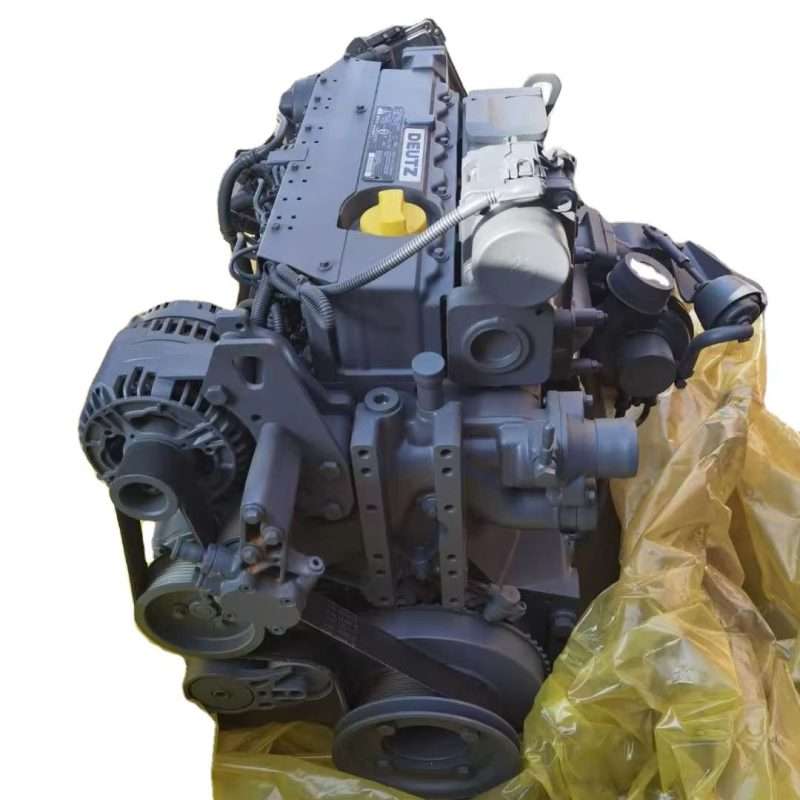
Technical Analysis of Deutz 2012 Series Engines

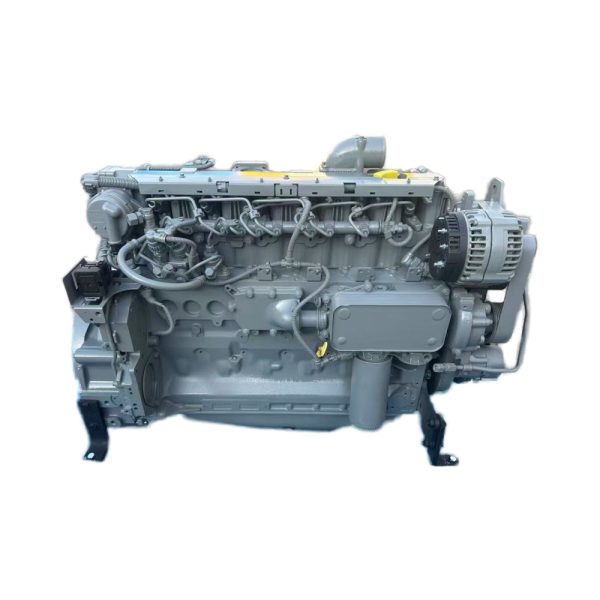
The Deutz 2012 series engines represent a major revolution in industrial engine design, abandoning traditional air-cooled designs in favor of an advanced high-density liquid-cooled architecture. This platform encompasses two engines: the four-cylinder BF4M2012 and the six-cylinder BF6M2012, designed to meet modern industrial demands for reduced noise, stringent emissions, and improved thermal stability. With a displacement of 1.01 liters per cylinder, a bore of 101 mm, and a stroke of 126 mm, the 2012 series engines set a new benchmark for power-to-weight ratio within the 55 kW to 155 kW power range. Thanks to its superior engineering, this series of engines has been widely adopted by major OEMs worldwide. Most notably, it forms the mechanical basis for Volvo’s D4D and D6D engines, which power tens of thousands of excavators and loaders, enabling them to operate reliably in some of the world’s most demanding environments.
The core technology of the 2012 Series engine lies in its unique PLD (Pump-Drive-Injection) unit pump system, a hybrid injection technology that cleverly combines powerful mechanical force with precise electronic control. Unlike traditional engines that use a single centralized injection pump, the 2012 Series engine features an independent injection pump for each cylinder, directly driven by the engine camshaft. This configuration enables extremely high injection pressures, typically up to 1600 bar, crucial for achieving the fine fuel atomization required for clean combustion and high torque density. While the physical pumping is mechanical, injection timing and fuel quantity are controlled by an Electronic Management Regulator (EMR). This dual-layer control ensures that even if one unit pump fails, the remaining cylinders can typically continue operating, providing critical safety margins and a “limp-home” function, especially important in remote construction sites and mines.
The 2012 Series engine employs an integrated cooling and lubrication design, maximizing thermal efficiency while minimizing external leakage points, thus ensuring engine structural integrity and thermal management. The engine block features a deep-skirted cast iron design with a tunnel-type crankcase, providing exceptional rigidity for the seven-bearing crankshaft (six-cylinder models). A key engineering innovation is the integrated oil cooler, which is mounted directly inside the engine block, rather than externally. By utilizing the engine’s main cooling water jacket to regulate oil temperature, Deutz ensures stable lubricant viscosity even under continuous high-load operation. This liquid-cooled design also offers inherent sound insulation; the water jacket significantly reduces internal mechanical noise from combustion, making the 2012 series engines among the quietest in their class—crucial for machinery operating in noise-sensitive urban environments.
To maintain the 2012 series engines’ optimal service life of over 15,000 hours, technical maintenance must focus on fluid chemistry and mechanical calibration, not just filter replacement. Because this is a high-pressure liquid-cooled system, the condition of the coolant is critical; using any coolant below the quality heavy-duty long-life (ELC) level can lead to cylinder liner cavitation and scaling within the narrow passages of the integrated oil cooler. Furthermore, while the PLD system is highly reliable, it still requires fine fuel filtration—ideally down to 2 microns—to protect the precision-ground plungers from wear caused by low-quality diesel fuel. Operators must also strictly adhere to valve clearance adjustments; as an overhead valve (OHV) design, the 2012 Series engines rely on proper mechanical clearances to ensure optimal volumetric efficiency and prevent localized valve seat overheating. Neglecting valve clearance settings affects the engine’s “breathing” cycle, potentially leading to localized valve seat overheating.
For businesses managing Deutz or Volvo engine equipment, sourcing components that meet the precise metallurgical and tolerance specifications of the 2012 Series engines is the only way to ensure a long-term return on investment. At jianmingmachinery.com, we specialize in the high-risk components required for these engines, from precision-calibrated PLD unit pumps and multi-layer steel (MLS) cylinder head gaskets to complete engine overhaul kits featuring specific 101 mm piston geometry—essential for optimizing EMR controlled combustion—we have it all. Our technical team understands the nuances between the standard Deutz BF6M2012 and the Volvo-specific D6D model, ensuring that every component—from high-flow water pumps to heavy-duty turbochargers—is meticulously designed to withstand the unique vibration and thermal characteristics of your specific equipment. Choosing professional-grade components means you’re not just repairing a machine; you’re restoring the original engineering integrity of one of the world’s most successful industrial engine platforms.