Volvo D6E Engine Technology Analysis

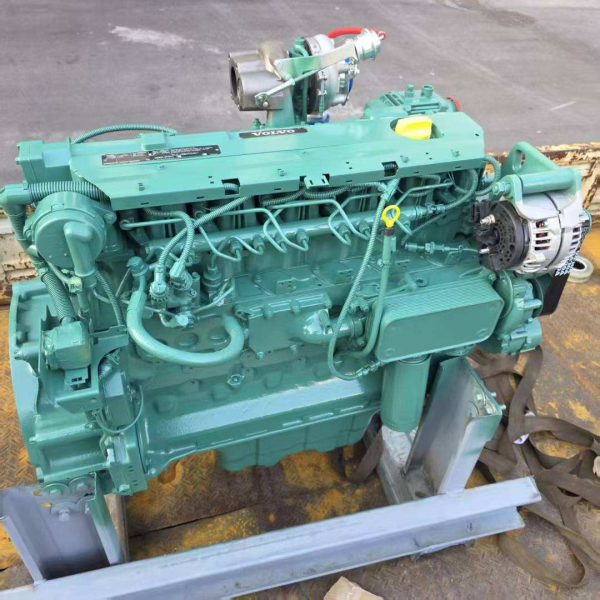
The Volvo D6E engine is a 5.7-liter inline six-cylinder, intercooled turbocharged high-performance diesel engine. As an evolution of the D6D series, the D6E’s core mission is to significantly improve fuel economy and transient response while meeting more stringent emission standards (such as Tier 3/Stage IIIA) through the introduction of advanced electronic control technology. This engine is the heart of Volvo’s mainstay construction equipment, widely used in the EC210C and EC240C series crawler excavators, as well as the L110F and L120F wheel loaders. In jianmingmachinery technical assessment, the D6E is not merely a collection of physical hardware; it represents a turning point in the deep integration of mechanical engineering and electronic control, bringing unprecedented control precision and power density to heavy machinery.
From the perspective of fuel management and electronic architecture, the D6E’s technological leap lies in its integration of Volvo’s advanced V-ACT (Volvo Advanced Combustion Technology) combustion technology. This system employs an electronically controlled high-pressure fuel injection scheme (typically an electronically controlled unit pump or an earlier common rail system variant), with the engine control unit (ECU) dynamically adjusting the injection quantity and timing of each cylinder at the millisecond level. This precise electronic control enables the D6E to achieve multiple injections, introducing a small pre-injection before the main injection to smooth the cylinder pressure rise, thereby significantly reducing combustion noise and harmful emissions. For the operator, this means that when faced with sudden loads (such as a bucket cutting into hard rock), the engine can adjust torque output faster than a mechanical pump, providing virtually lag-free power feedback.
In terms of structural engineering and thermal efficiency, the D6E inherits Volvo’s consistent heavy-duty design philosophy. The cylinder block is made of high-strength integral cast iron, combined with a deep skirt structure, ensuring excellent fatigue resistance even under the high burst pressures brought by the electronically controlled system. To cope with the high heat flow generated by electronic combustion, the D6E features a specially enhanced piston cooling system, directly cooling the piston crown through oil nozzles at the bottom. Its cylinder head features a cross-flow design, optimizing the geometry of the intake and exhaust ports to minimize intake resistance. Furthermore, the D6E’s rear gear train design not only optimizes the overall engine structure, making it more suitable for the compact C-series engine bay, but also effectively absorbs torsional vibrations in the timing system by placing the transmission gears close to the flywheel, utilizing flywheel inertia to extend the lifespan of accessories such as the water pump and fuel pump.
Fluid health and preventative maintenance are the physical lifeline for the D6E to maintain its over 15,000 hours of operational life. Because the electronic control system is far more sensitive to fuel quality than traditional mechanical pumps, even trace impurities or moisture in the fuel system can easily cause wear on the precision components of the electronic actuators, leading to unit pump failure or abnormal fuel injection compensation. In jianmingmachinery service records, we have repeatedly found that the D6E’s “sensor health” is equally critical. For example, carbon buildup or reading drift in the boost pressure sensor or fuel rail pressure sensor can cause the ECU to mistakenly enter Limp Mode, limiting engine output. Therefore, in addition to consistently using 2-micron high-efficiency filter elements, regularly cleaning the air filter and monitoring the antifreeze concentration in the coolant to prevent cylinder liner cavitation, a common phenomenon in large-displacement six-cylinder engines, are essential measures to ensure the long-term stable operation of the D6E.
For heavy equipment refurbishers and senior technicians, overhauling the D6E is a precise task requiring “data-driven” expertise. Unlike mechanical pump models, after an overhaul, the D6E often requires system initialization and parameter calibration using Volvo’s proprietary diagnostic tools (such as VCADS) to ensure the ECU can recognize the new mechanical break-in characteristics. At jianmingmachinery every core overhaul component we provide for the D6E, from 98mm piston assemblies with reinforced ring grooves to high-precision MLS (multi-layer steel) cylinder head gaskets, strictly adheres to Volvo’s original metallurgical specifications. We understand that a D6E-driven machine is a high-value asset for our customers. Only through this “mechanical perfection + electronic precision” restoration standard can this 5.7-liter electronically controlled power source regain its Volvo-specific balanced, efficient, and low-consumption industrial dominance after returning to the construction site.